
Vaccine: the word that hides a cow
The word «vaccine» comes from the Latin vacca, «cow». Edward Jenner coined it after finding that cowpox protected people against the deadly smallpox.
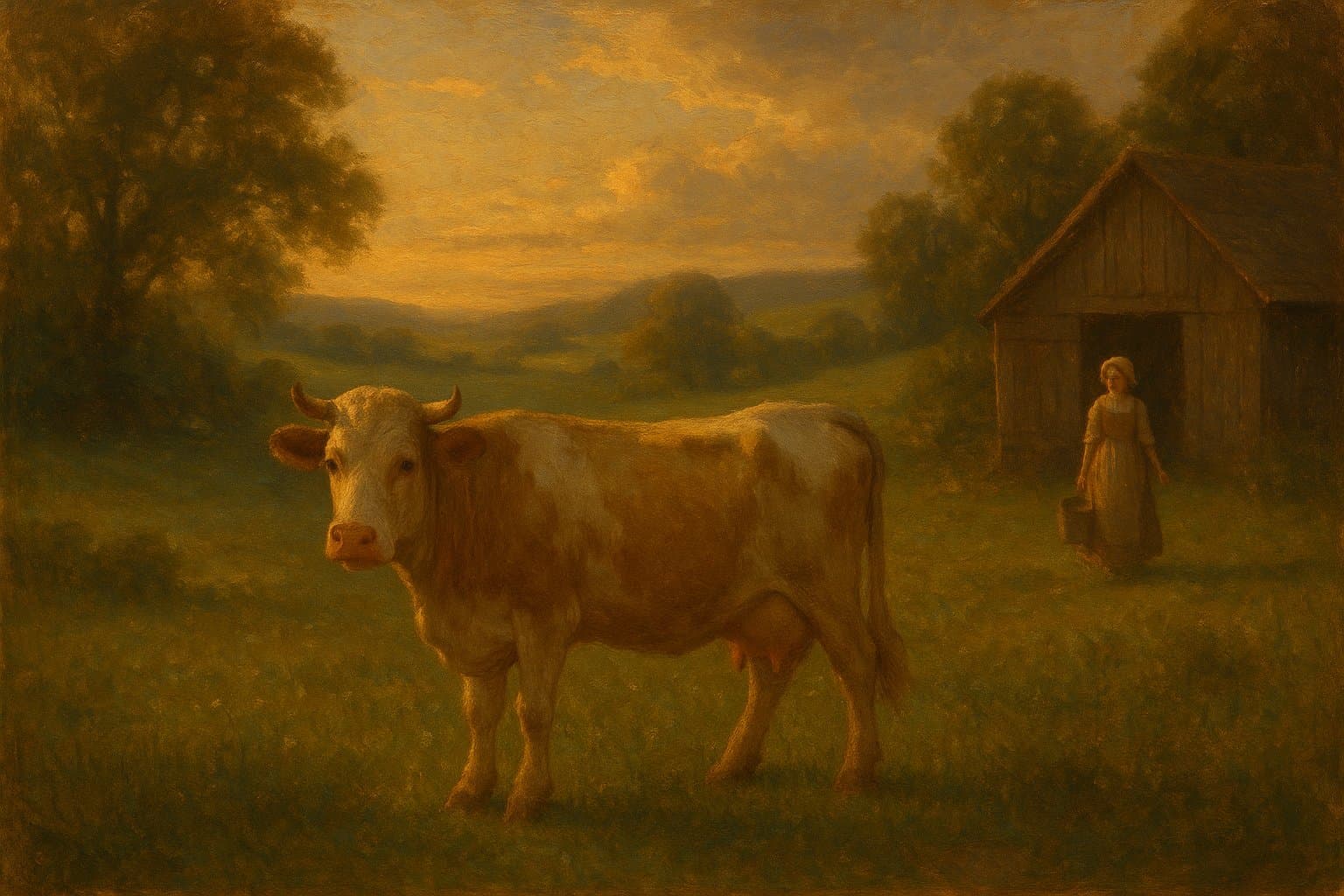
Every time someone talks about a vaccine —against the flu, measles, or a new virus— they are pronouncing, without realizing it, the Latin word for «cow». It is not a quirky coincidence or a pun: the term was born literally from cows, and behind it lies one of the most important stories in the history of medicine. Before there were vaccines, there were, quite seriously, cows.
A disease that terrified the world
To understand where the word comes from, we have to remember what it saves us from. For centuries, smallpox was one of the most feared diseases on the planet: in the twentieth century alone it is estimated to have killed around 300 million people, and survivors were often left with skin scarred for life. It respected no social class: it killed kings, emperors, and peasants alike.
The only old defense was variolation: inoculating a healthy person with a small amount of pus from a mild case, hoping to trigger a light illness that would leave immunity. It sometimes worked, but it was risky: quite a few people died from the «treatment» itself.
The observation of the milkmaids
Enter Edward Jenner (1749–1823), a country doctor in the English county of Gloucestershire. A folk belief circulated in the countryside: milkmaids who had caught cowpox (a mild disease that produced blisters on the cows' udders and on the hands of those who milked them) never seemed to fall ill with the dreaded human smallpox. It was even said that dairymaids had especially beautiful skin because they were never left pockmarked.
Jenner decided to put the idea to the test. In May 1796 he took material from the blisters of a milkmaid named Sarah Nelmes, who had been infected by a cow, and inoculated it into an eight-year-old boy, James Phipps. The child had a brief discomfort. Weeks later, Jenner injected him with real human smallpox —unthinkable today for ethical reasons— and the boy did not fall ill. The protection worked.
When the cow entered the dictionary
Jenner needed a name for it. He christened the cowpox agent in Latin as Variolae vaccinae, literally «pox of the cow», using the adjective vaccinus, «of a cow», derived from vacca. In 1798 he published his treatise with that term in the title, and from there the words «vaccine» and «vaccination» leapt into everyday speech. In the Romance languages the kinship is even more transparent: Spanish inherited vacca directly as vaca (cow) and vacuna (vaccine).
It is a case much like other words whose origin we have completely forgotten, as when we discover that «nostalgia» was a medical diagnosis or that «algorithm» was a mathematician's surname. Language keeps fossils of whole stories inside everyday words.
From smallpox to every vaccine
For almost a century, «vaccine» meant only one thing: protection against smallpox using cow material. The turning point came in 1881, when Louis Pasteur proposed, at a medical congress in London, extending the term to all the immunizations then being developed —against chicken cholera, anthrax, and soon after, rabies— as a tribute to Jenner. It was Pasteur who turned «vaccine» into the general word we use today, even though none of those new vaccines had anything to do with cows anymore.
The outcome of that chain that began at a cow's udder was enormous: in 1980, smallpox became the only human disease ever completely eradicated, thanks to vaccination. Other medical battles followed equally surprising paths, like the bark that became gin and tonic and a remedy against malaria.
So the next time you get vaccinated, remember that the word for one of humanity's greatest achievements is, at its root, a grateful nod to a farm animal. Before there were vaccines, there really were cows.
References
- «Edward Jenner», Encyclopædia Britannica. britannica.com
- «A Brief History of Vaccination», World Health Organization (WHO). who.int
- «Smallpox vaccine», Wikipedia. en.wikipedia.org
- Douglas Harper, Online Etymology Dictionary, s. v. «vaccine». etymonline.com
Do you enjoy the stories behind words? Continue with the origin of «algorithm» or explore the whole etymology series.
Categories
The books · born from this blog
Atahualpa con su abrigo de pelo de murciélago
y otras 49 historias verdaderas que parecen mentira
Available on Amazon
Tocar madera
Pequeña historia de las supersticiones que el mundo no ha podido soltar
Available on Amazon
100 futuros
Cien escenarios del mundo que viene con la inteligencia artificial
Available on AmazonYou may also like

Placebo: the Latin word that means «I shall please»
«Placebo» means «I shall please» in Latin and began as a medieval funeral chant. Here is how it jumped from the church to medicine and its famous effect.
The Origin of the Word “Robot”: Born in a Czech Play
Where does the word robot come from? Czech writer Karel Čapek coined it in 1920 from robota, forced labor; and the idea was actually his brother Josef's.
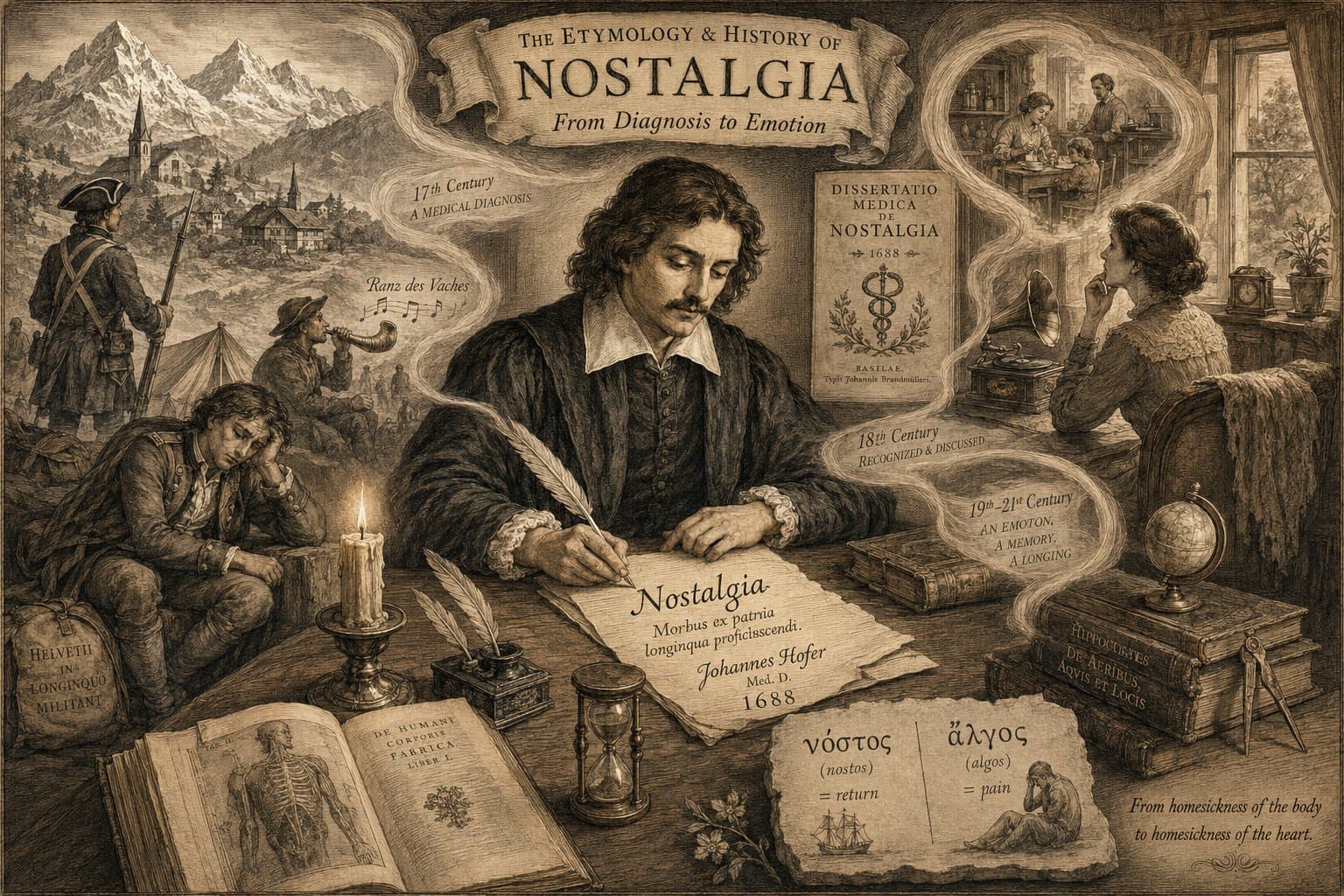
Nostalgia: The Word That Was a Medical Diagnosis
Nostalgia was born in 1688 as a deadly disease: a Swiss student invented it to name the illness suffered by soldiers who longed for their homeland.