
Mysteriously endless experiments. Can they work indefinitely? One of them has been in operation since the 19th century.
A bell ringing nonstop since 1840 and a tar drop falling once a decade: two stubborn experiments that have outlived the scientists who began them.
They will sound like two science fiction stories, but they are not. These are experiments or devices that, even after the death of those who started them, still continue to function to this day, working patiently after decades or even centuries of being started. The perpetual movement It is not possible, but these devices remain stubborn, "trying" to defy the laws of physics, at least until now.
A kind of ticking clock
The story begins in the year 1840, when the physicist Robert Walker, a university professor, acquired a rare device: a kind of bell activated by an unusual high-voltage battery called Zamboni Stack. At that time it must have been a rather peculiar device, since electricity was still little known and many considered it a matter of magic or divine (or demonic) force. It is said that he did it to demonstrate some scientific hypotheses of that time, such as the Electrification By Contact theory (now discarded). But in reality little is known with certainty, it is not even certain that the device has a Zamboni battery, the only thing that is known for sure is that It was acquired in 1840 and since then it has not stopped working. Nor has there been anyone who dares to find out the mystery of this seemingly inexhaustible battery, as disrupting the happy little machine, trapped inside a glass bell, could destroy it. They are waiting for the bell to stop, one day, to disarm it, for they fear that any change could stop the fragile machinery composed of a kind of long metal pendulum that delicately tolls two bronze bells.
To get an idea of the time when this happened: many Latin American countries had very little time to live and others did not even exist, the incandescent light bulb had not been invented, worse the airplane and Darwin's "first opera": The Origin of the Species, was still several years away from being published.
If anything, a lot has happened since then. To date, it is almost 200 years in which this kind of clock has never stopped and has continued to buzz slightly like a tireless little metallic bee. It is estimated that there are more than 10,000,000,000 (ten trillion) times the bell has rung to date and it is thought that he still has a lot of life ahead of him.
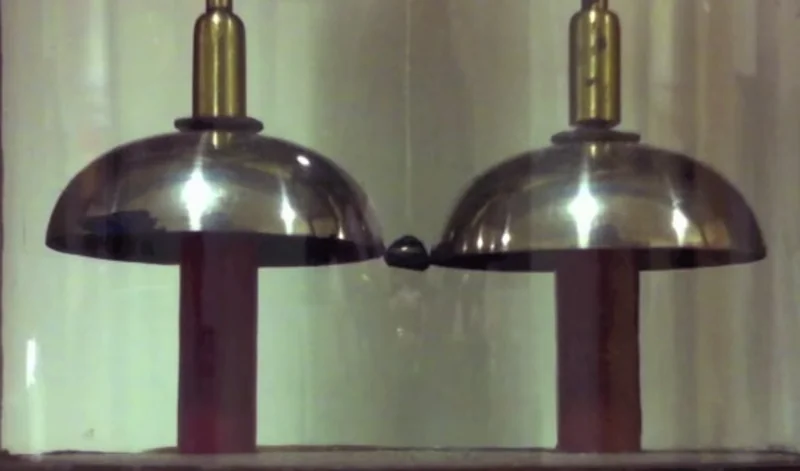
The peculiar bell stands in a corridor next to Clarendon's laboratory at Oxford University and has already received a place in the famous Guinness Book of Records as the longest-lasting battery in the world.
And, although the above may seem crazy, it is not the only case.
An endless leak
In 1927, in Australia, another enthusiast named Thomas Parnell, eager to discover how viscous a substance can be, decided to do another of these experiments that would not come to an end (or at least while he was alive). It was at the University of Queensland and his motivation was to show his students that there are apparently solid substances, which can actually be extremely viscous, only our time frame doesn't allow us to see how fast they flow. In fact, many glasses are actually viscous substances, but in our lifetime we see them practically intact, solid. If we installed a camera that takes a sequence of images every so often and we waited long enough (maybe a lifetime), maybe we would notice something by watching the video in fast motion.
In practice, Parnell's experiment served not only to demonstrate the idea to his students, but apparently to his grandchildren and great-grandchildren as well.
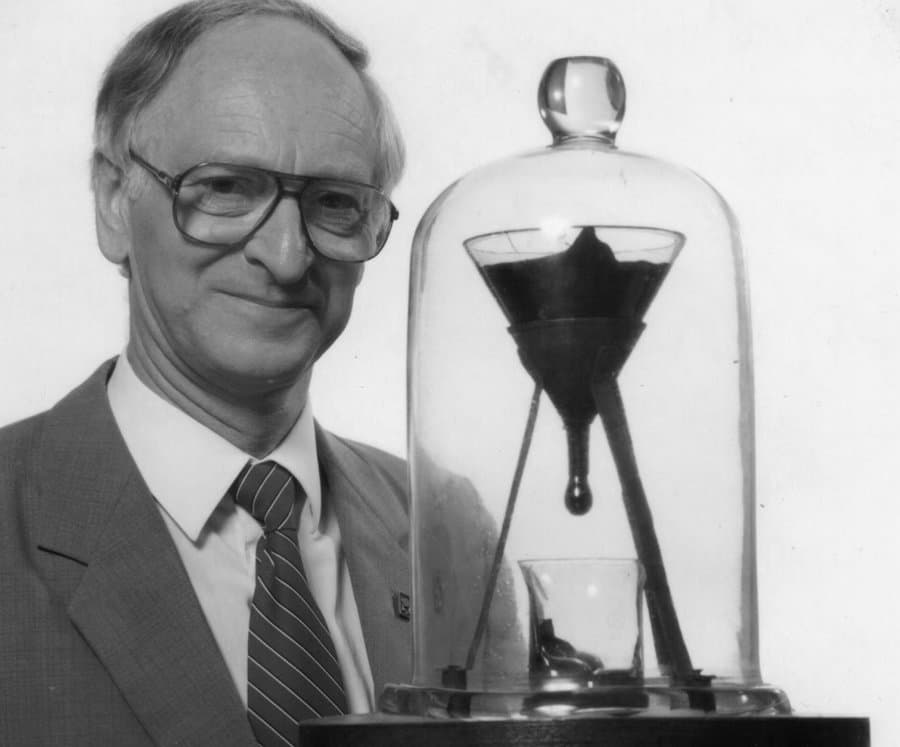
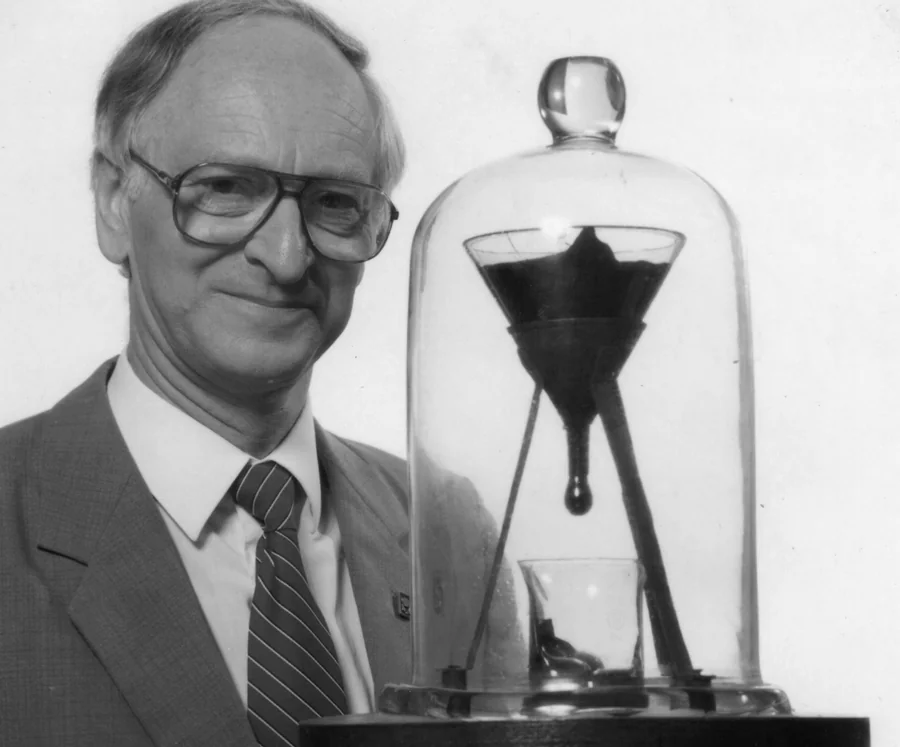
The truth is that the experiment began and has not stopped yet. It is a funnel that contains a kind of tar. The idea is that the tar drips through the funnel, emptying all its contents. So far only nine drops have passed through the neck of the funnel, the last one on April 17, 2014, and the next drop is expected to fall sometime in 2028. Its custodian for half a century was Professor John Mainstone, of the University of Queensland, who died in 2013 holding the cruellest record in science: he watched over the funnel for 52 years and missed all three drops that fell on his watch — one because he was having a cup of tea, another because he stepped out for a moment, and the third because the camera meant to record it failed.
The light bulb that has been on since 1901
This bulb has already broken all performance records and is so much so, that it won a Guinness record for the longest-lit bulb.
This light bulb is found in a fire station in the city of Livermore, California. It is known that it aimed to stay on 24 hours, every day; But no one suspected that it would be over 100 years old without having to replace it, and it remains on to this day.
There are believed to be two keys to how this happened. The first is that the bulb runs on very low voltage: from the start it was meant to give a dim light, like a pilot lamp for the station, and a lightly stressed filament wears out slowly. The second key is more uncomfortable, and it is the real moral of this story: light bulbs in 1901 were built to last.
The cartel that decided light bulbs should last less
Because the obvious question is the one almost no one asks: if back in 1901 we already knew how to make a bulb capable of lasting more than a century, why do the ones we buy today burn out in a couple of years? The answer has a name and a date. In 1924, the world's leading bulb manufacturers —Osram, Philips, General Electric and others— met in secret and formed the so-called Phoebus cartel, with an aim that today reads like satire but is fully documented: they agreed to deliberately limit the lifespan of their bulbs to around one thousand hours, fining any member who made one that lasted longer. It was the first documented case of planned obsolescence —the art of designing things to break just in time to sell you another— a practice that has done nothing but perfect itself ever since, in almost everything we buy.
The Livermore bulb, burning since before that pact, is therefore more than a curiosity: it is a silent witness, hanging from the ceiling of a fire station, to a world in which things were still made to last. For more than a hundred and twenty years it has been reminding us of that, without saying a word and without going out.
References
- A. J. Croft, "The Oxford electric bell", European Journal of Physics, vol. 5, no. 4, 1984, pp. 193-194. DOI: 10.1088/0143-0807/5/4/001. doi.org
- School of Mathematics and Physics, University of Queensland, "The Pitch Drop Experiment" (official page of the experiment started by Thomas Parnell in 1927). smp.uq.edu.au
- Centennial Light Bulb Committee (Livermore-Pleasanton Fire Department, Livermore Heritage Guild, Lawrence Livermore and Sandia National Laboratories), "Centennial Bulb: the Longest Burning Light Bulb in History", official site. centennialbulb.org
- Markus Krajewski, "The Great Lightbulb Conspiracy", IEEE Spectrum, September 24, 2014. spectrum.ieee.org
Categories
The books · born from this blog

Atahualpa con su abrigo de pelo de murciélago
y otras 49 historias verdaderas que parecen mentira
Available on Amazon
Tocar madera
Pequeña historia de las supersticiones que el mundo no ha podido soltar
Available on Amazon
100 futuros
Cien escenarios del mundo que viene con la inteligencia artificial
Available on AmazonYou may also like
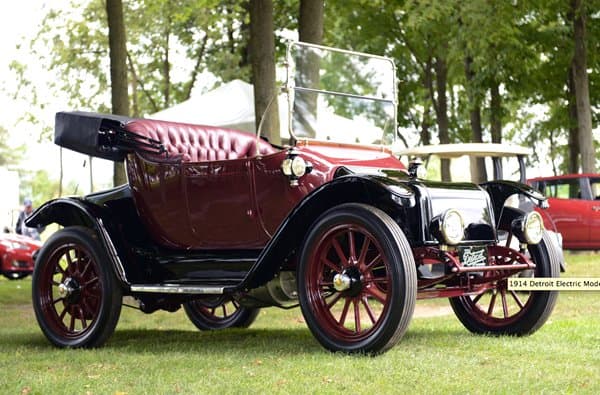
Electric vehicles, an invention that we forget, because of oil, but they have existed since the 19th century.
Electric cars aren't new: a 1927 guide reveals models from the 1890s with a 100-mile range, an invention oil made the world forget for a century.
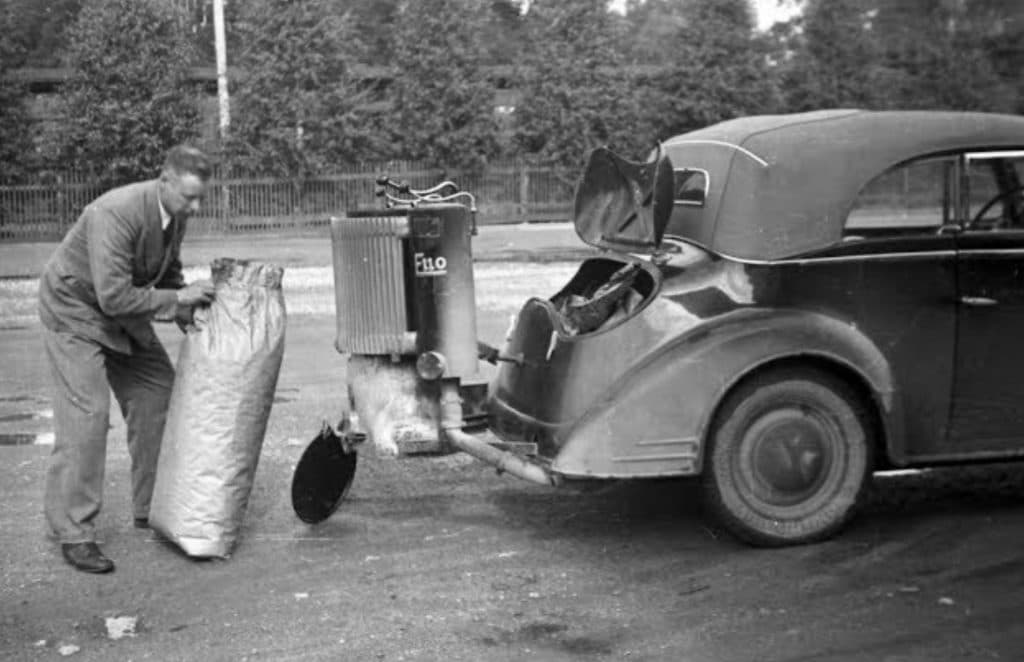
The Car That Runs on Firewood: Old Technology Cuba Is Reviving Out of Necessity
A Cuban mechanic runs his Fiat on charcoal, reviving the century-old gasifier that powered half a million cars in WWII, now reborn out of necessity.
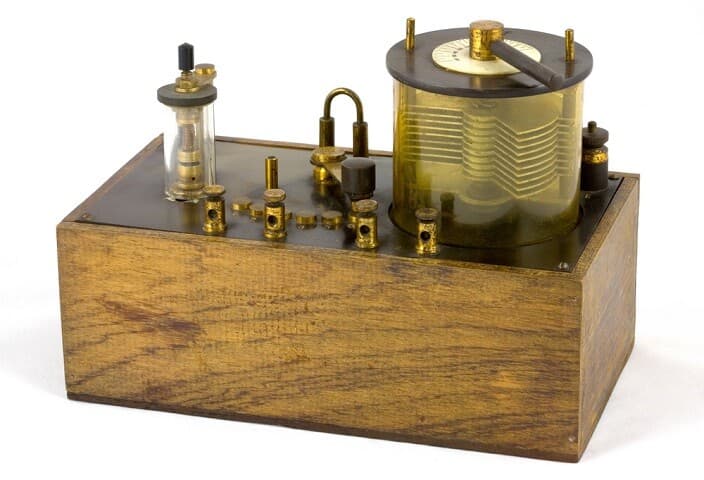
Harvesting energy from radio waves (Energy harvesting). A technology that we already used more than a century ago.
Harvesting energy from radio waves sounds like the future, yet a battery-free crystal radio was already doing it back in the 19th century.