
The Maya and Aztecs Made Paper Before Columbus
Centuries before Columbus, the Maya and Aztecs were making bark paper: amate, the skin of the codices the conquistadors would later burn.

When the Spanish arrived in Mesoamerica they found something they were not expecting: peoples who made paper, wrote books and kept libraries. The Maya and the Aztecs had been producing paper for centuries before Columbus, without any contact with China, where paper was invented, or with Europe, which had received it from the Arabs. They called it āmatl in Nahuatl — the origin of the word amate — and huun in Maya, and on it they recorded their astronomy, their calendars, their tax rolls and their gods.
Paper that grew on trees
Amate was made from the inner bark of several species of wild fig tree (the Ficus still called amates in Mexico, known to the Maya as kopo'). The process was strikingly similar to that of other great papermaking traditions: strips of bark were peeled off and boiled in water with lime or ash to soften the fiber — the same idea behind the nixtamalization of corn — and the strips were then laid crosswise on a wooden board and beaten with a grooved stone until the fibers fused into a continuous sheet.
Dried in the sun, the sheet came out flexible and strong. To write on it, scribes coated it with a thin layer of lime stucco that left a smooth white surface, ready for ink and pigments. The result had nothing to envy Egyptian papyrus or European parchment.
Older than it looks
This was no late development. Archaeologists have found stone bark beaters — the key tool of the trade — at Mesoamerican sites more than two thousand years old, and the Classic-period Maya were already writing on their huun long before the Aztec empire existed. In other words: while Europe was still copying manuscripts onto ruinously expensive parchment, the Americas already had an independent papermaking tradition, invented without any contact with the rest of the world.
That is the detail people tend to forget: paper was invented at least twice in human history. Once in China, from where it passed to the Islamic world and on to Europe; and once in Mesoamerica, entirely on its own. Pre-Columbian America was far more sophisticated than the old schoolbook caricature suggests — much like that densely populated Amazon the first chroniclers described and nobody wanted to believe.
Books folded like an accordion
This paper was used to make the codices: long strips of amate, sometimes several meters long, folded in zigzag like a screen or an accordion, painted on both sides and sometimes protected with covers of wood or jaguar skin. The Aztecs called them āmoxtli, and the houses where they were kept, āmoxcalli: literally, "houses of books". Libraries, centuries before any European arrived.
The most famous surviving Maya book, the Dresden Codex, contains tables of the planet Venus and eclipse predictions of astonishing accuracy. And the so-called Maya Codex of Mexico, authenticated in 2018 after decades of suspicion, was dated to between the years 1021 and 1154: it is the oldest legible book of the Americas, produced some four centuries before Columbus's first voyage.
Half a million sheets a year
For the Aztecs, paper was no scribal curiosity: it was an industrial product and a tribute good. The empire's tax records, such as the Codex Mendoza, show that papermaking towns sent Tenochtitlan hundreds of thousands of amate sheets a year — the usual figures hover around 480,000 — just as other towns sent cacao beans, which literally served as money.
What was all that paper for? For running an empire: tribute records, censuses, maps, genealogies. And for religion: ritual banners and vestments, cut-out figures, and sheets spattered with drops of rubber that were burned as offerings. Paper permeated Mesoamerican life in a way that sixteenth-century Europeans found at once familiar and unsettling.
The fire of Maní
That familiarity did not save the books. In 1562, the Franciscan friar Diego de Landa ordered dozens of Maya codices burned in the Yucatec town of Maní, deeming them the work of the devil. He told it himself, bluntly: "We found a large number of books… and, as they contained nothing in which there were not superstition and lies of the devil, we burned them all, which they regretted to an amazing degree, and which caused them much affliction."
Between bonfires, humidity and plunder, barely four codices survive today out of the entire Maya production of books. Of the Aztec books written before the conquest, almost none remain: most of the codices we know are copies and compilations made in colonial times. It is one of the greatest documentary losses in history: entire libraries of a world that wrote itself down, reduced to a handful of survivors.
Was it "real" paper?
A purist of paper history would add an honest caveat here: technically, "true" paper is made by macerating fibers into a watery suspension and collecting them on a screen, as the Chinese invented it. Amate, made of beaten bark, is a closer relative of Polynesian tapa cloth — just as Egyptian papyrus is not strictly paper either. But the caveat is about manufacture, not function: amate was a light, foldable, portable, writable surface, mass-produced and used to make books. Everything we ask of paper, it delivered.
Amate never died
The colonial authorities persecuted amate precisely because of its ritual use — it was "idolatry paper" — and its manufacture nearly disappeared. Nearly. In the Sierra Norte de Puebla, the Otomí of San Pablito kept the technique alive for centuries, and today revived amate is painted and sold as one of Mexico's most recognizable crafts. When you buy a painting on amate you are holding, without knowing it, the direct continuation of a papermaking industry more than a thousand years older than Columbus.
So the next time someone takes it for granted that writing and books reached the Americas aboard the caravels, you know the answer: the books were already here. What arrived in 1492 was, among other things, the fire that burned them.
References
- "Amate", Wikipedia. en.wikipedia.org
- "Maya codices", Wikipedia. en.wikipedia.org
- "Maya Codex of Mexico", Wikipedia. en.wikipedia.org
- Diego de Landa, Relación de las cosas de Yucatán (1566). See "Diego de Landa", Wikipedia. en.wikipedia.org
Enjoy these stories from the pre-Columbian world? Continue with the legend of Atahualpa's chess game or explore the whole history category.
Categories
The books · born from this blog
Atahualpa con su abrigo de pelo de murciélago
y otras 49 historias verdaderas que parecen mentira
Available on Amazon
Tocar madera
Pequeña historia de las supersticiones que el mundo no ha podido soltar
Available on Amazon
100 futuros
Cien escenarios del mundo que viene con la inteligencia artificial
Available on AmazonYou may also like
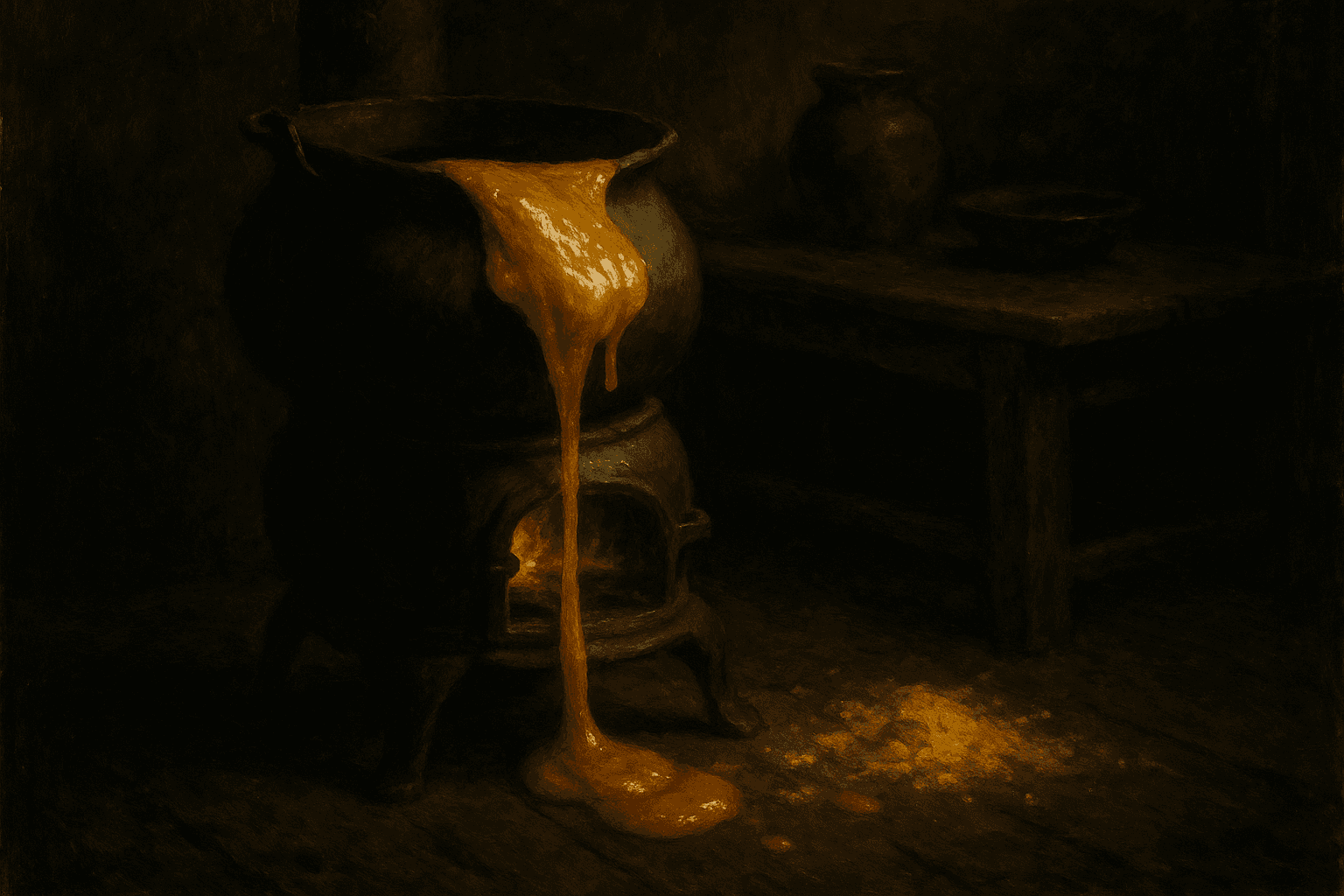
Rubber Before Goodyear: The Gum That Melted
Before vulcanization, rubber was a gum that melted in summer and cracked in winter. From the Maya to Goodyear, here's how it was finally tamed.
Tires before rubber: the hard history of bumpy travel
Before the air-filled tire, travel meant wooden wheels with iron rims that jolted every bone. This is the story of rubber, from Goodyear to Michelin.
Gunpowder Before Cannons: Alchemy, Fire and War
Chinese alchemists chasing eternal life invented gunpowder by accident. Before cannons came fireworks, fire lances and centuries of fire medicine.