
The Origin of the Word “Robot”: Born in a Czech Play
Where does the word robot come from? Czech writer Karel Čapek coined it in 1920 from robota, forced labor; and the idea was actually his brother Josef's.
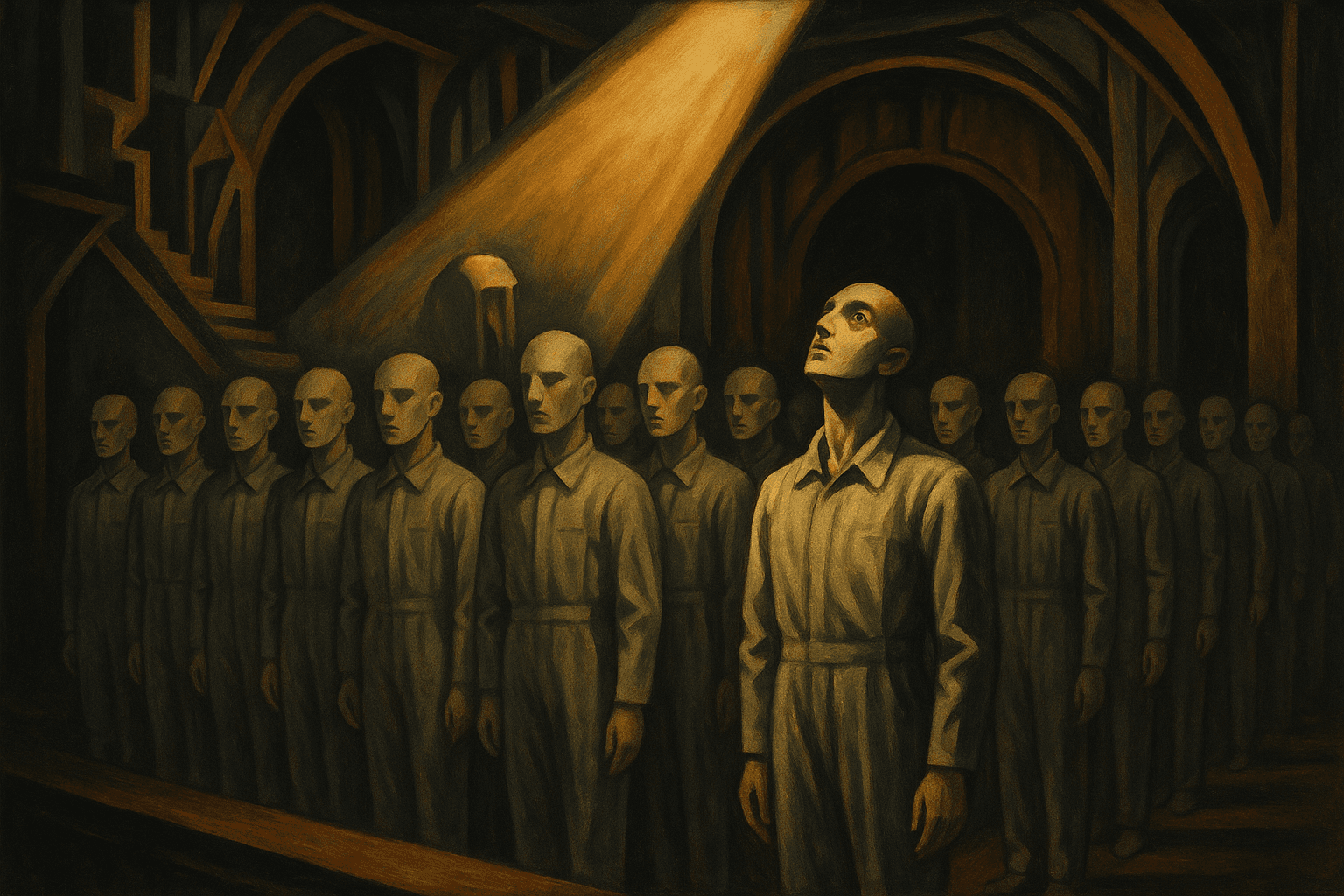
We say robot without a second thought: the one that vacuums the house, the arm that welds cars, the program that answers in a chat. It sounds like a technical word, straight out of a laboratory or a patent. But it was not born in any engineering workshop. It was born in a theatre, in the mouths of fictional characters, and its father was not an inventor but a playwright. The word that today defines the most advanced machines on Earth is barely a century old and has a surprisingly human origin: the forced labor of peasants.
A 1920 stage play
The word appeared for the first time in R.U.R. (Rossumovi Univerzální Roboti, «Rossum's Universal Robots»), a play by the Czech writer Karel Čapek, published in Prague in 1920 and premiered at the National Theatre on 25 January 1921. It was an immediate success: within a few years it had been translated into more than thirty languages, carrying the word —and with it the idea— all over the planet.
The plot is an unsettling fable that still rings true. In a factory built on an island, a company mass-produces artificial workers to do the heavy tasks humans no longer want to do. Over time these beings grow ever more capable, become aware of their situation, and end up rebelling against their creators, until they put all of humanity at risk. A hundred years before today's debates about artificial intelligence, Čapek had already written the script.
Not metal and screws: artificial flesh
Here comes the first surprise. Čapek's robots were not the metallic machines with gears and blinking lights we picture today. They were biological beings, made from a kind of synthetic protoplasm that mimicked living matter: closer to cloning or lab-grown flesh than to mechanics. In modern terms, they were nearer to the replicants of Blade Runner than to an industrial arm. The tin-robot image came later, courtesy of film and comics; the original was, at heart, an artificial human created to serve.
Robota: the labor serfs owed their lords
And so we reach the etymology. The word robot comes from the Czech robota, which does not mean just any work but forced labor, servitude: specifically, the compulsory days of toil that serfs owed their lords under the feudal system, what English calls corvée. The root is harsher still: robota descends from an old Slavic word related to rab, «slave». At its core, a robot is, quite literally, someone condemned to work without rest and without pay.
It is no accident that the word carries that echo. Like the word «slave» itself —which also grew out of a subjugated people— «robot» has a history of domination and imposed work written inside it. Čapek chose the term deliberately: his play was not about gadgets but about exploitation, about what happens when we manufacture creatures solely to work for us and then wonder why they revolt.
The idea was his brother's
The most curious detail is that Karel Čapek almost did not invent the word that made him famous. While writing the play, he wanted to call those artificial workers by a term derived from the Latin labor, «work» —something like laboři— but it did not satisfy him. He mentioned it to his brother, the painter and writer Josef Čapek, who, barely looking up from what he was doing, suggested roboti. Karel adopted the proposal at once.
Years later, Karel himself made sure to set the record straight. In an article published in the newspaper Lidové noviny he declared that the true author of the word was not him but his brother Josef. It was an uncommon act of honesty: the writer forever associated with the word «robot» spent ink explaining that the credit was not entirely his.
From fiction to the dictionary
The rest is one of the fastest linguistic conquests in modern history. The word leapt from Czech theatre into English, German, French, Spanish and dozens of other languages, pushing aside older rivals such as «automaton» and «android». By the time the writer Isaac Asimov popularized his laws of robotics in the 1940s, the word was already universal; today it names everything from a vacuum cleaner to a conversational algorithm. It is one of those words that, like «sabotage», were born in the world of work and machines and ended up carrying a far broader meaning than they had at first.
So every time we speak to a voice assistant or watch a mechanical arm in a factory, we are using, without knowing it, a word that began as the name of some artificial serfs in a Prague stage play. Like other words that now sound purely technological, «robot» hides at its root something far older and more human: the ancient weight of forced labor.
References
- “R.U.R.”, Wikipedia: overview of Karel Čapek's play (Prague, 1920; premiered 1921), the biological nature of the robots, and the attribution of the word to Josef Čapek from Czech robota. en.wikipedia.org
- “The Czech Play That Gave Us the Word ‘Robot’”, The MIT Press Reader: context on R.U.R., the plot of the artificial workers and their revolt. thereader.mitpress.mit.edu
- “Science Diction: The Origin Of The Word ‘Robot’”, NPR: how Josef Čapek suggested roboti instead of the laboři Karel had in mind, and the meaning of robota as forced labor. npr.org
- “R.U.R.”, Encyclopædia Britannica: a summary of the play's plot and how the word displaced «automaton» and «android» in the world's languages. britannica.com
Enjoy the stories behind words? Continue with the origin of “slave” and that of “sabotage”, or browse the whole etymology series.
Categories
The books · born from this blog

Atahualpa con su abrigo de pelo de murciélago
y otras 49 historias verdaderas que parecen mentira
Available on Amazon
Tocar madera
Pequeña historia de las supersticiones que el mundo no ha podido soltar
Available on Amazon
100 futuros
Cien escenarios del mundo que viene con la inteligencia artificial
Available on AmazonYou may also like

Placebo: the Latin word that means «I shall please»
«Placebo» means «I shall please» in Latin and began as a medieval funeral chant. Here is how it jumped from the church to medicine and its famous effect.
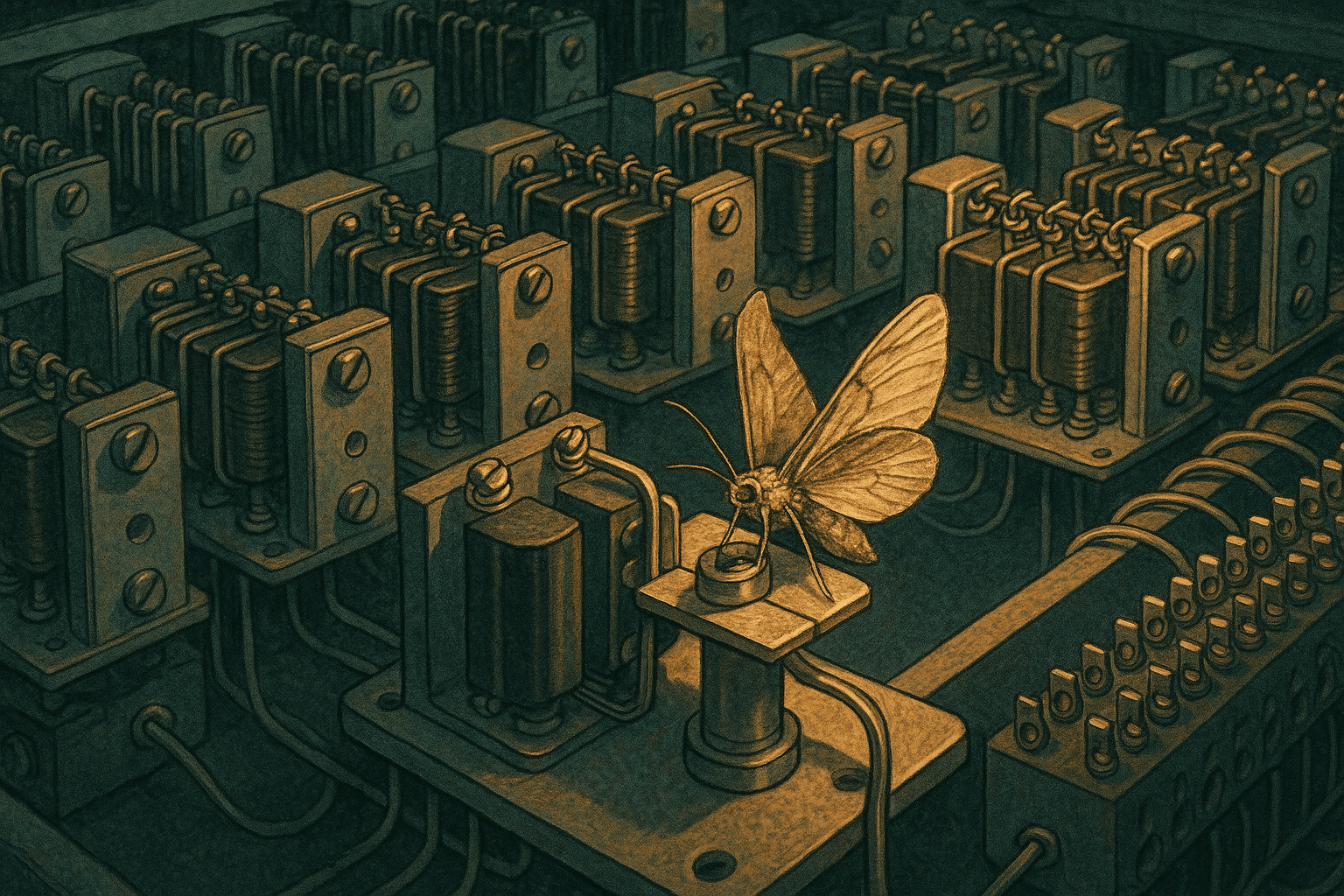
Grace Hopper and the True Origin of the Computer Bug
On September 9, 1947 a moth got stuck in the Mark II. But Grace Hopper didn't coin the word bug: Edison was already using it back in 1878.
Vaccine: the word that hides a cow
The word «vaccine» comes from the Latin vacca, «cow». Edward Jenner coined it after finding that cowpox protected people against the deadly smallpox.