
The first computer virus was called Brain
In 1986, two brothers in Lahore wrote Brain, the first PC virus. It destroyed nothing: it guarded their software and left their name, address and phone.
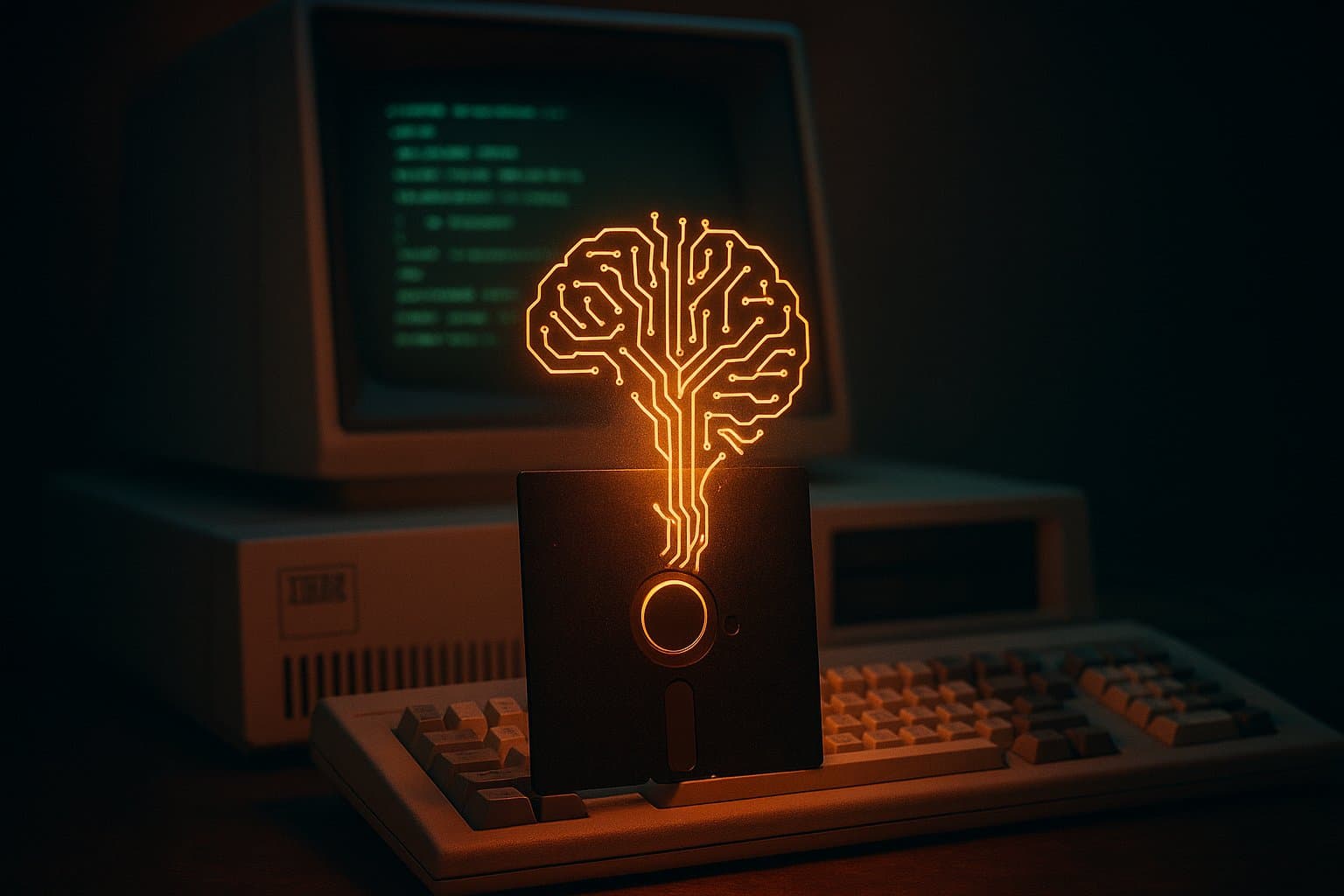
The first computer virus to spread around the world did not come from a secret lab or an anonymous criminal genius. It was born in a small computer shop in Lahore, Pakistan, written by two brothers in their twenties, and instead of hiding, it left its authors' names, address, and even a phone number on every disk it touched. It was called Brain, and in January 1986 it began traveling from floppy to floppy across half the planet.
Two brothers and a software shop
Basit Farooq Alvi, 19, and his brother Amjad ran Brain Computer Services, a computing business in Lahore. Among other things, they wrote medical software and sold it to local customers. The problem was the usual one: their programs were copied without permission and passed hand to hand on pirated floppies, without the brothers seeing a cent for those copies.
Their solution was as clever as it was unintentionally historic. They wrote a small program that attached itself to floppy disks and, whenever a disk was copied, copied itself along with it. Their stated intention, as they later told Time magazine, was to track piracy of their medical software and discourage anyone from copying it. They did not mean to destroy anything: they wanted to leave a mark.
How Brain worked
Technically, Brain was a boot sector virus. On the floppy disks of the era, the first sector held the code the computer read when it powered up with the disk inserted. Brain replaced that sector with a copy of itself and moved the original boot code elsewhere on the disk, marking it as «bad» so no one would touch it.
The result was that the virus loaded into memory before the operating system every time an infected floppy was used. From there, it silently infected any other floppy that was inserted. Because it also hid its tracks —if you tried to read the boot sector, Brain showed you the clean original— it is also considered the first «stealth» virus in PC history. It did, however, change the disk's volume label to «©Brain», a discreet signature for anyone who knew where to look.
A virus with an address and a phone number
The most astonishing thing today is that Brain did not hide its authors: it advertised them. Inside the code, in the infected sector, was a message that read:
«Welcome to the Dungeon © 1986 Basit & Amjad (pvt) Ltd. BRAIN COMPUTER SERVICES, 730 Nizam Block, Allama Iqbal Town, Lahore-Pakistan… Beware of this VIRUS… Contact us for vaccination…»
Along with «Beware of this VIRUS… Contact us for vaccination» came the shop's real address and several phone numbers. The Alvis expected anyone who found the virus to call so they could «clean» the disk. What they did not foresee was how many people would end up calling: the program spread far beyond what they intended, and for years they received calls from furious users in the United States and Europe. In the end they had to change their phone lines.
From Lahore to the world
Brain slipped abroad on floppies that traveled in suitcases and envelopes: students, tourists, copied programs. Between 1986 and 1989 it infected, by most estimates, at least 100,000 disks in the United States, and turned up everywhere from Saudi Arabia to Indonesia. In 1988, the University of Delaware suffered a well-publicized outbreak that helped push the topic into the headlines. It caused no serious damage —at most it took up space and slowed disk access— but it proved something unsettling: a program could reproduce on its own and cross borders with no one steering it.
That scare, in fact, founded an entire industry. The need to detect and remove programs like Brain gave rise to the antivirus business. Just as happened with the first junk email in history, a seemingly harmless experiment opened the door to a huge problem that is still with us.
The strangest epilogue: they're still there
Unlike so many malware creators who ended up in hiding or in prison, the Alvi brothers never ran: the virus's address was, literally, their office. Decades later they were still operating from Lahore, now running Brain Telecommunication, one of Pakistan's largest internet providers. When security journalists went looking for them in 2011, they found them in the very place printed in that 1986 message.
The Alvis always insisted their intention was not to cause harm, and it is true that Brain was almost benign compared with what came later. But it opened a box that could no longer be closed. The history of computing is full of these twists, as when we discover that the CAPTCHA ended up losing its own battle, or the long road that led from the idea behind the word «algorithm» to the programs that now govern our machines. Brain was the first of a long lineage: the floppy disk, without knowing it, had learned to catch a cold.
References
- «Brain (computer virus)», Wikipedia. en.wikipedia.org
- «Malware of the 1980s: Looking back at the Brain virus and the Morris worm», WeLiveSecurity (ESET). welivesecurity.com
- «19 January 1986: the world's first PC virus infection», MoneyWeek. moneyweek.com
- «"Brain", the First PC Virus Epidemic, Created in Lahore», HistoryofInformation.com. historyofinformation.com
Do you enjoy stories about technology? Continue with the history of the QR code or explore the whole technology section.
Categories
The books · born from this blog
Atahualpa con su abrigo de pelo de murciélago
y otras 49 historias verdaderas que parecen mentira
Available on Amazon
Tocar madera
Pequeña historia de las supersticiones que el mundo no ha podido soltar
Available on Amazon
100 futuros
Cien escenarios del mundo que viene con la inteligencia artificial
Available on AmazonYou may also like
Why Computer Files Are Called Files
The digital file inherits its name from a real office: papers strung on a thread. From the Latin filum to the file system, this is the story of the file.
The First Personal Computer Wasn't the One You Think
Almost everyone credits the 1975 Altair as the first personal computer, but several came earlier: from Olivetti in 1965 to the Kenbak-1 in 1971.

The nocebo effect: when expecting harm creates it
The nocebo effect is the placebo's dark twin: believing a treatment will hurt can make it hurt. Its origin, real cases and what science says.