
The origin of the word slave: a whole people's name
«Slave» comes from «Slav»: so many Slavic people were captured and sold in the Middle Ages that the name of the people became the word for bondage.
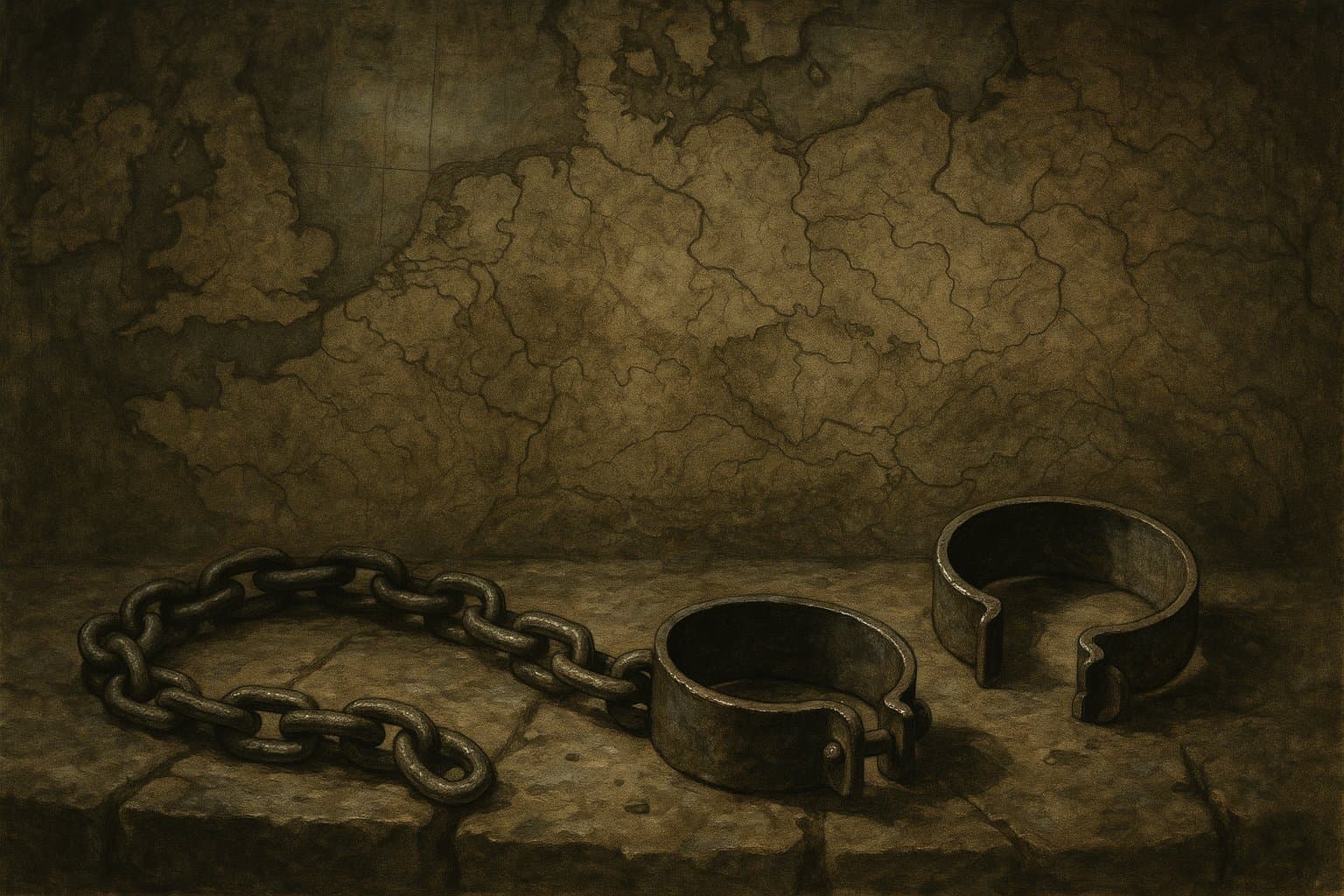
Some etymologies are uncomfortable, and this is one of the most uncomfortable of all: the word slave and the word Slav —the name of the peoples who today live in Russia, Poland, Ukraine, Czechia, or Serbia— are, at bottom, the same word. This is not a phonetic coincidence or an internet legend like so many we have debunked in this series: it is documented history, and behind it lies one of the most brutal chapters of the human trade in Europe.
From «Slav» to «slave»
The chain is direct and accepted by the standard dictionaries. In Byzantine Greek the Slavic peoples were called Sklábos (Σκλάβος), after their own name. From there it passed into Medieval Latin as sclavus, which at first meant simply «a Slav». But between the eighth and tenth centuries something terrible happened: so many people of Slavic origin were enslaved that, in the markets of half of Europe and the Islamic world, the word that named the people came to name the condition of being another person's property. An ethnic label became a common noun.
The linguistic leap is the same kind of drift we saw when an Irish captain's surname became the word «boycott»: a concrete name —of a person or a people— that ends up christening an entire category. In the other European languages the trace is visible: French esclave, German Sklave, Italian schiavo, Spanish esclavo. German even keeps the original skl- cluster; in English it was reduced to sl-, but the Slav is still there, hidden inside the slave.
Why so many Slavs were for sale
For an ethnic name to become a synonym for bondage takes a horrifying scale. And there was one. Through the Early Middle Ages the Slavic peoples occupied much of central and eastern Europe and were mostly pagan, which in the eyes of their Christian and Muslim neighbors made them «legitimate» prey. Franks, Saxons, Byzantines, and others launched systematic raids across the river Elbe and toward the Balkans to seize captives. The Church forbade selling Christians to Muslims, but a pagan Slav fell outside that protection.
The result was an enormous, highly organized market. Genoa and Venice became major hubs of this traffic, and the Genoese colony of Caffa, in Crimea, funneled captives from north of the Black Sea. Demand was so great that the name of the people displaced the old Latin terms: where Latin had once said servus —the root of «serf»— it began to say sclavus.
The route to al-Andalus
One of the best-documented streams ended in the Iberian Peninsula. In medieval Arabic the Slavs were called saqaliba, a direct borrowing of the same root, and the Caliphate of Córdoba knew the lands north of Prague as Bilad as-Saqaliba, «the land of the Slavs». From there, merchants —among them the Radhanites— carried the captives across Europe to the markets of al-Andalus, crossing the Rhône and passing through Narbonne and Tortosa.
The grimmest stop on that route was Verdun, in present-day France, notorious because there a portion of the prisoners were castrated to be sold as eunuchs, more prized in the Andalusi courts. Chroniclers of the age such as Bishop Liutprand of Cremona and the Arab geographer Ibn Hawqal described it without euphemism. It is the same world of al-Andalus that gave us, by far gentler roads, the word «algorithm»: the same frontier between Christendom and Islam produced both mathematics and markets in human beings.
The final irony: «those who speak»
Here the story turns almost cruel. The name the Slavs gave themselves, slověne, most probably comes from slovo, «word» or «speech»: they would be «those who speak», those who understand one another, those who share a language. It is exactly the opposite of barbarian, the term with which the Greeks scorned the foreigner for making an unintelligible noise, a «bar-bar». A people who proudly defined themselves by their capacity to speak ended up giving their name to the word for someone with no voice and no rights.
As with the disputed origin of «gringo», softer and more decorative versions have circulated here too, but the core is solid and well documented. The next time someone mentions the Slavic peoples, or every time the word slave appears, it is worth remembering where it comes from: not from a metaphor, but from centuries of real people captured, castrated, and sold until the name of their people became, in the mouths of their captors, the name of their misfortune.
References
- «Slavery in medieval Europe», Wikipedia. en.wikipedia.org
- «Slave», Etymonline. etymonline.com
- «Saqaliba», Wikipedia. en.wikipedia.org
- «Origin of 'slave' and 'Slav'», Word Histories. wordhistories.net
Do you enjoy the stories behind words? Continue with the origin of «assassin» or explore the whole etymology series.
Categories
The books · born from this blog
Atahualpa con su abrigo de pelo de murciélago
y otras 49 historias verdaderas que parecen mentira
Available on Amazon
Tocar madera
Pequeña historia de las supersticiones que el mundo no ha podido soltar
Available on Amazon
100 futuros
Cien escenarios del mundo que viene con la inteligencia artificial
Available on AmazonYou may also like

The origin of the word alcohol: from makeup to the glass
«Alcohol» comes from the Arabic «al-kuhl», a black powder used as eye makeup. How a cosmetic ended up naming the most famous drink in the world.

The origin of the word bikini: a nuclear explosion
«Bikini» comes from the Pacific atoll where the U.S. tested atomic bombs in 1946. A French designer named his swimsuit that way so it would be «explosive».
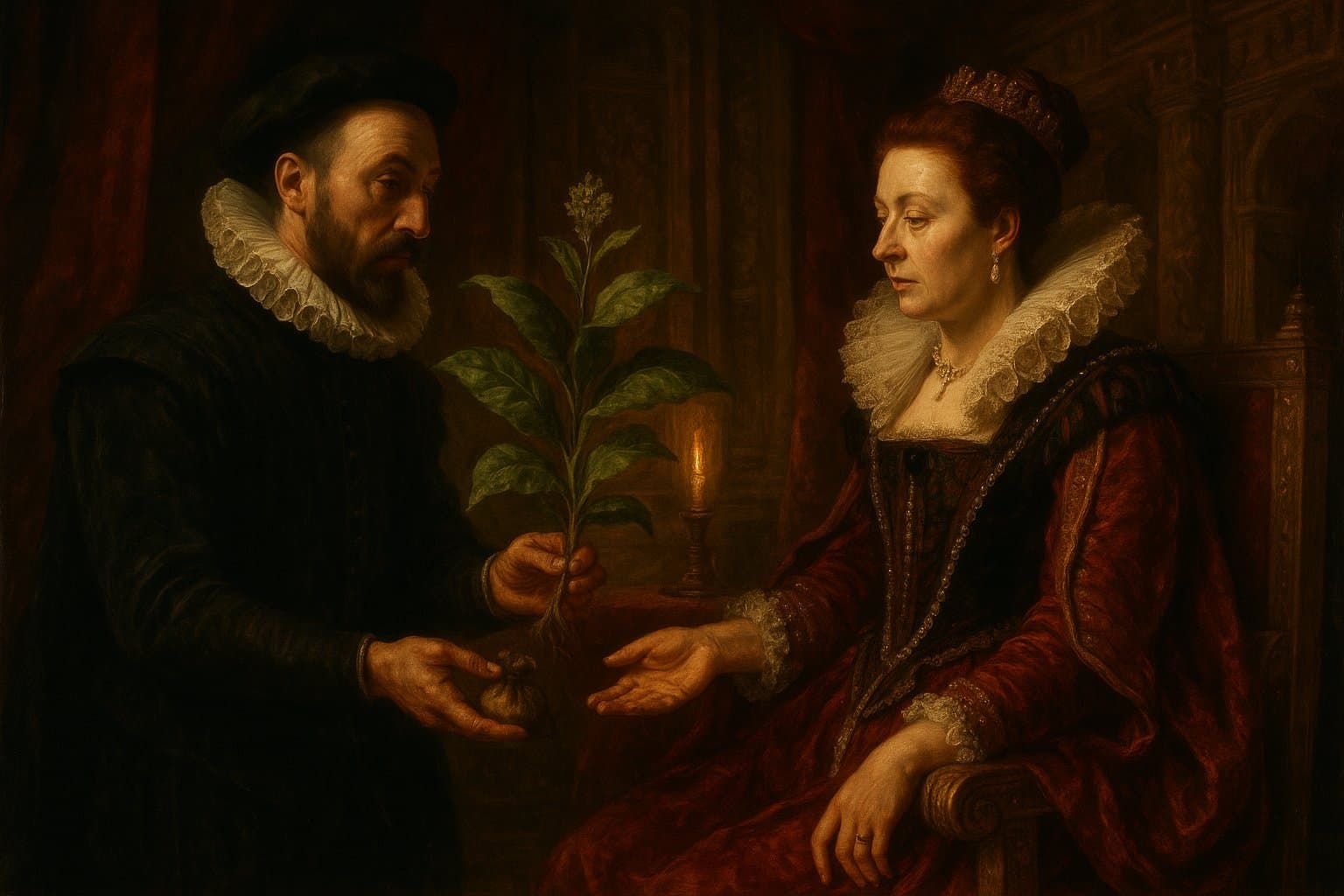
The origin of the word nicotine: a French ambassador
«Nicotine» comes from Jean Nicot, the ambassador who sent tobacco to Catherine de' Medici in 1560. How a surname ended up naming an addictive molecule.