
The origin of the word silhouette: a stingy minister
«Silhouette» comes from the surname of a French minister so austere his name turned into a synonym for «cheap»: hence the shadow portraits.
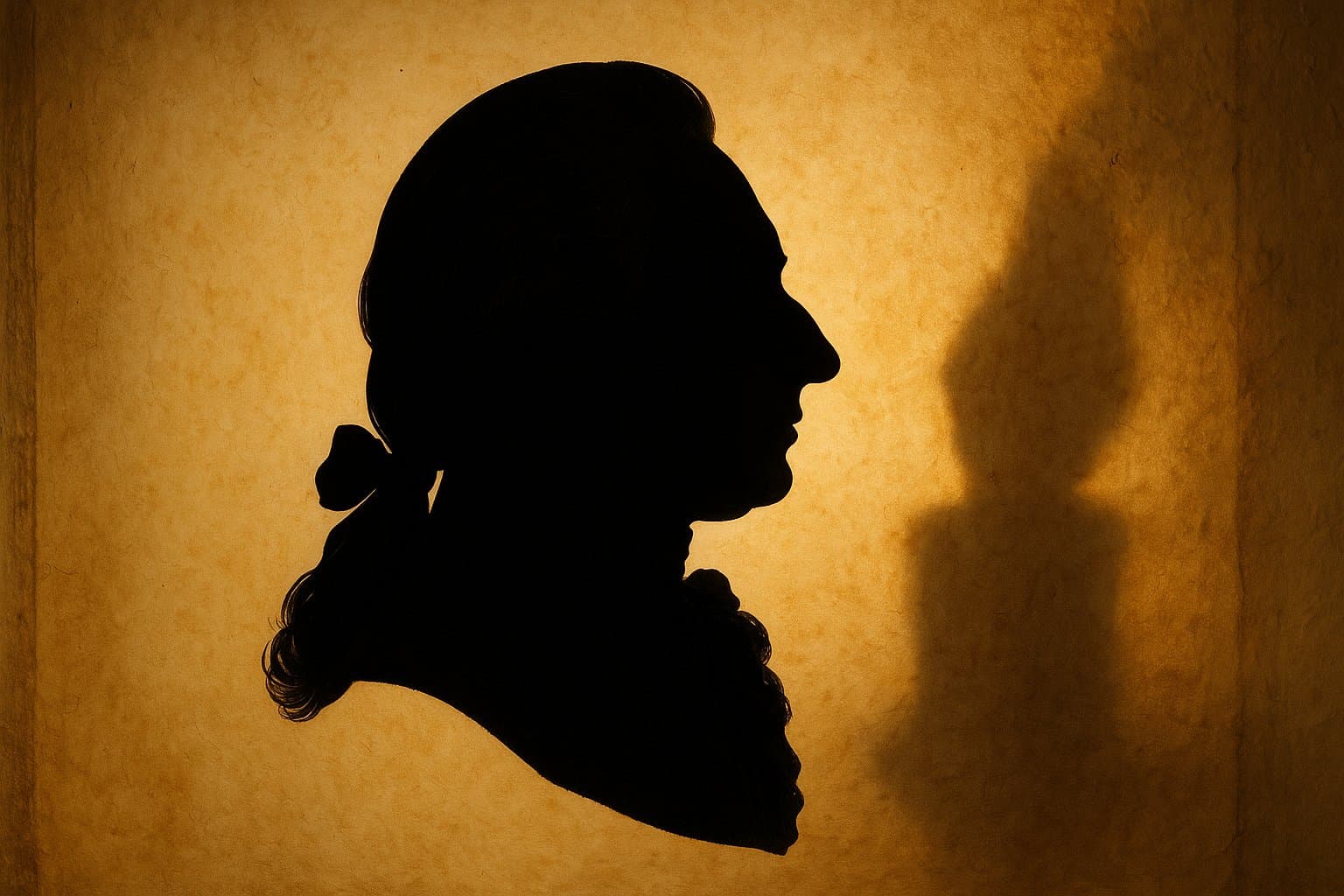
Some words are born from an object, a place, or a myth. «Silhouette» was born from something far stranger: the bad temper of the French aristocracy toward a finance minister who tried to raise their taxes. His surname was Silhouette, and in barely eight months in office he managed to turn his own name into a synonym for anything done in a hurry, on a shoestring, on the cheap. Out of that insult came the word we now use for the dark outline of any figure.
The minister who lasted eight months
Étienne de Silhouette (1709–1767) took the post of Controller-General of Finances on 4 March 1759, at the worst possible moment. France was up to its neck in the Seven Years' War, the royal treasury was empty, and its credit was in tatters. Silhouette had a reputation as a capable man with modern ideas about economics, and he arrived with the impossible task of plugging the hole without sinking the country altogether.
His solution was as logical as it was suicidal for his career: if the state needed money, it had to collect it from those who had it. He devised a «general subvention», a tax on the external signs of wealth —doors and windows, servants, luxury goods, the profits of the rich—. In theory it was fair; in practice, it hit the pockets of the nobility, who until then had managed to pay almost nothing. The reaction was immediate and ferocious.
When your surname becomes an insult
The nobles could not dismiss him with a stroke of the pen, so they did something more effective: they ridiculed him. Soon anything that looked mean, unfinished, or made to save money was described with the mocking formula «à la Silhouette». A coat with no pleats, trousers with no pockets, any pared-down, austere fashion carried the name of the minister who wanted them to tighten their belts. The surname stopped naming a person and began naming a way of skimping.
It is exactly the same mechanism that turned other surnames into everyday words. We saw it when the name of an Irish land agent became «boycott», or when a Virginia judge gave his surname to «lynch». Language has that cruelty: sometimes it remembers you forever, but only for the worst thing said about you. Silhouette left office on 20 November 1759, defeated and mocked. His name, however, stayed behind.
The portrait for those who could not afford a portrait
One last step was missing: for the word to attach itself to those black profiles cut out of paper. In eighteenth-century France, having an oil portrait painted was hugely expensive and reserved for the well-off. The alternative for ordinary people was far humbler: project the shadow of someone's profile against a wall, trace its outline, and cut the figure out of black paper. Quick, cheap, with no color and no detail. In a word: à la Silhouette.
And so those shadow portraits —the very height of thrift— ended up christened with the name of the stingy minister, and the term silhouette stuck to them. In time it lost all its mocking charge: today we speak of the silhouette of a mountain or of a body without a thought for taxes or offended nobles. The word went from political insult to a plain, neutral outline, just as «sabotage» left its clogs behind to mean any act of destruction.
The origin no one can quite confirm
As in almost every good word story, there is a loose end. Etymologists warn that the connection between the minister and the portraits is not entirely proven. One awkward detail: there are mentions of portraits «à la Silhouette» as early as 1758, that is, before Silhouette took office. If that is true, the explanation of mockery over his taxes starts to wobble.
That is why a much kinder alternative theory circulates: that Étienne de Silhouette himself was an enthusiast of these cutouts. It is said that he decorated the walls of his castle at Bry-sur-Marne with shadow profiles he traced himself, and that the name came from there, not from the insult. So claims, for instance, a note in the French Journal Officiel of 1869. The final irony is delicious: of a man whose surname christened millions of silhouettes, not a single portrait survives, neither painted nor cut out. The inventor of shadows was left without a face.
References
- «The shadowy history of the word 'silhouette'», Word Histories. wordhistories.net
- «Étienne de Silhouette», Wikipedia. en.wikipedia.org
- «Silhouette», Etymonline. etymonline.com
- «Étienne de Silhouette», Encyclopædia Britannica. britannica.com
Do you enjoy the stories behind words? Continue with the origin of «boycott» or explore the whole etymology series.
Categories
The books · born from this blog
Atahualpa con su abrigo de pelo de murciélago
y otras 49 historias verdaderas que parecen mentira
Available on Amazon
Tocar madera
Pequeña historia de las supersticiones que el mundo no ha podido soltar
Available on Amazon
100 futuros
Cien escenarios del mundo que viene con la inteligencia artificial
Available on AmazonYou may also like

The origin of the word alcohol: from makeup to the glass
«Alcohol» comes from the Arabic «al-kuhl», a black powder used as eye makeup. How a cosmetic ended up naming the most famous drink in the world.

The origin of the word bikini: a nuclear explosion
«Bikini» comes from the Pacific atoll where the U.S. tested atomic bombs in 1946. A French designer named his swimsuit that way so it would be «explosive».
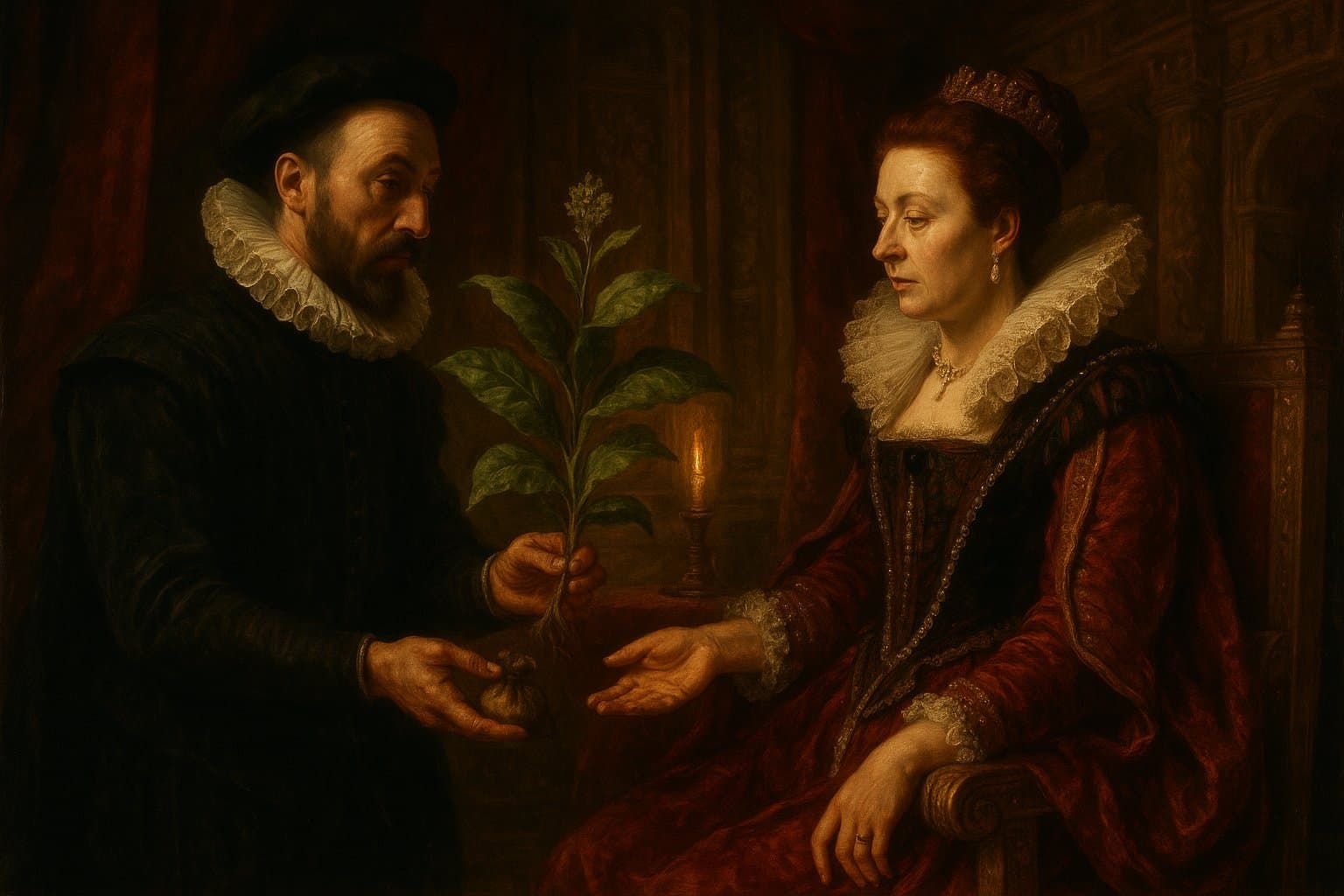
The origin of the word nicotine: a French ambassador
«Nicotine» comes from Jean Nicot, the ambassador who sent tobacco to Catherine de' Medici in 1560. How a surname ended up naming an addictive molecule.