
Alfonso Graña, the Spaniard who became king of an Amazon tribe
Alfonso Graña fled hunger in Galicia, vanished into the Amazon and ended up crowned king of the Jívaros of the Upper Marañón. The true story of Alfonso I.

A starving Galician peasant crosses the Atlantic at the end of the 19th century, gets lost in the Amazon jungle and ends up turned into king of the Jívaros, the very people famous for shrinking human heads. It's not a tavern legend. The man was named Alfonso Graña and, for more than a decade, to half the jungle of the Upper Marañón he was Alfonso I of the Amazon.
A starving man from Ourense
Alfonso Graña was born on March 5, 1878, in the parish of Amiudal, in Avión, a village in the province of Ourense, in Galicia. His was the Galicia of hunger, the one that for decades pushed hundreds of thousands of peasants out toward the Americas. Like so many others, while still very young he packed his bags and sailed to the other side of the ocean chasing anything that resembled a future.
He landed first in Brazil and later in Peru. And there he got into the business that in those years moved the entire Amazon: rubber. Graña was one of the thousands of anonymous tappers who ventured into the jungle to bleed trees during the era when the Amazon was the richest place on the planet. Based in Iquitos —that river port the rubber fever turned rich and gaudy— he spent years chasing latex and, when he could, gold.
He is described as a tall, thin man of fragile appearance, and he wore glasses. Not exactly the image one pictures of a warrior king of the jungle.
The jungle swallowed him
Around 1922 the rubber business collapsed. The Asian plantations run by the British had blown up the price, and overnight the Amazon lost its golden goose. Many tappers lost everything. Graña, instead of heading back to the coast, did the opposite: he pushed even deeper in, toward the most remote corners of the Peruvian jungle. And there, quite simply, his trail went cold.
The most widely told version —part documented, part legend— says a band of Jívaro warriors surprised him, killed his companion and were about to kill him too. What saved his life, they say, is that the daughter of the tribe's chief grew fond of that skinny, bespectacled outsider. Instead of ending up as a shrunken head dangling from a spear, Alfonso Graña stayed on to live among them.
Who the Jívaros were (and are)
A clarification is in order, because "Jívaro" is a loaded word. It's the name the Spanish gave to a group of related Amazonian peoples who live on both sides of the border between Ecuador and Peru: the Shuar and Achuar on the Ecuadorian side, and the Aguaruna (Awajún) and Huambisa (Wampis) on the Peruvian side. They do not call themselves Jívaros; it's an exonym, and today many consider it derogatory.
Their worldwide fame comes from a real practice: the tsantsa, the shrunken head. They would cut off the heads of enemies fallen in combat and, through a process of skinning and boiling, shrink them to the size of a fist as a ritual trophy. It was precisely that reputation as fearsome warriors that kept these peoples unconquered for centuries: neither the Inca empire nor the Spanish crown ever truly subdued them. And it was among these people that a peasant from Ourense landed, without ever meaning to.
How a Galician ends up a king
Here the story turns blurry, and it's only honest to say so. According to the most repeated account, Graña married the chief's daughter and, when the old leader died, the tribe recognized him as successor. Hence the title he has passed into posterity with: apu, which in those languages means something like chief or lord. Spanish chroniclers, always generous with a myth, promoted him to "king" and christened him Alfonso I.
The most reasonable reading is that he was not a king in the European sense —with crown and throne— but an apu of apus, a respected chief able to mediate between clans that had been at each other's throats for generations. That a white outsider pulled that off is extraordinary in itself. In a world full of invented kingdoms and countries that existed only in the imagination of a con man, the curious thing about Alfonso Graña's kingdom is that, for all its exaggerations, some of it was real.
The chronicles speak of an immense territory, between the Nieva and Santiago rivers and the Upper Marañón. The most enthusiastic went so far as to say he ruled an expanse "the size of half of Spain." That's worth taking with a grain of salt: these were jungles with no drawn borders and no census, and much of those figures come from journalists who romanticized the story years later. But even stripping away the legend, one solid fact remains: for about twelve years, a Galician was the highest recognized authority over an enormous and extremely dangerous slice of the Amazon.
What kind of king he was
What's interesting is that Graña didn't rule at gunpoint, but by usefulness. He was the only white man in the area, and he used what he knew of the outside world to make himself indispensable. He taught them new techniques for building homes, tanning hides, obtaining salt and drying paiche, that giant Amazonian river fish that can be over two meters long. When he went down to Iquitos, he came back loaded with novelties from the outside world. He became a bridge between two eras that should never have touched.
Surviving for decades in that jungle was no small thing: fevers killed more than spears did, in an age when the only defense against malaria was the cinchona bark that had made the region famous. That a frail man in glasses withstood all of it says a good deal about his stubbornness.
His influence was so real that, according to several sources, when the American oil company Standard Oil wanted to prospect in the Upper Marañón, it had to negotiate the permit to enter with him. That an oil multinational had to sit down and deal with a Galician peasant turned Jívaro chief is, perhaps, the best measure of just how far his authority reached.
The plane that fell in his river
There's one episode that reads like a novel and yet is firmly dated. In February 1933, amid the tension between Peru and Colombia over the Leticia conflict, a squadron of Peruvian seaplanes was caught by a brutal storm over the Manseriche gorge. One of the aircraft crashed into the thicket and its pilot, the young Arequipa native Alfredo Rodríguez Ballón, died of his injuries. He went down, of all places, in the Nieva river: the heart of Graña's territory.
The story goes that Graña recovered the body, embalmed it as best he could, built a coffin out of wood and metal sheets from the plane itself, and had it carried on rafts, downriver, through rapids and jungle, all the way to Iquitos, so the aviator could have a decent burial. If the name Rodríguez Ballón rings a bell, it's because today Arequipa's international airport bears it. His final journey was arranged by a Galician king in the middle of nowhere.
The end of the kingdom
The reign ended the way almost all of them do: without epic. In December 1934, at the age of 56, Alfonso Graña died of stomach cancer on his way to his estate on the Marañón. For a long time his death was barely a rumor among rumors, until decades later the researcher Maximino Fernández Sendín found a letter that confirmed it and reconstructed the man's biography, rescuing him from the limbo between history and folk tale.
No one knows for certain what became of his remains, nor how the Jívaros said goodbye to their outsider apu. Like much of his life, the ending was swallowed by the jungle.
Who reigns over that land today
The story has an epilogue Graña would have liked, even though it takes the spotlight off him. In November 2015, the Wampis peoples of the Santiago and Morona river basins —the same Huambisa the Galician reigned among— gathered and proclaimed the Autonomous Territorial Government of the Wampis Nation, the first autonomous Indigenous government in the Peruvian Amazon. Today they administer more than a million hectares of jungle themselves, and they demand that the Peruvian state let no oil or mining company into their territory without their consent.
In other words: a century later, the land an outsider once "reigned" over is governed by its own inhabitants, with no need for any Alfonso I. And maybe that's the best way to tell this story: not as the tale of a European who tamed some savages —that's the same old colonial mold— but as that of a poor man from Ourense who, rather than conquer the jungle, had the good sense to let the jungle adopt him.
Not bad at all for a starving man who left Galicia unable to read a map.
Sources
- Wikipedia — Alfonso I of the Amazon (Alfonso Graña)
- El Español — "Alfonso I, the Galician who got lost in the Amazon"
- Infobae — "Alfonso Graña, proclaimed King of the Jíbaros"
- Wikipedia — Alfredo Rodríguez Ballón (the aviator of the Nieva river)
- Wikipedia — Autonomous Territorial Government of the Wampis Nation
References
- Maximino Fernández Sendín, Alfonso I de la Amazonía, rey de los jíbaros: la increíble y veraz historia de Alfonso Graña, el gallego que reinó entre las tribus jíbaras del Alto Marañón (documentary biography). Listing on Dialnet.
- IWGIA, "The Wampis Nation: the first autonomous Indigenous government in Peru" (Autonomous Territorial Government of the Wampis Nation, established November 28, 2015). iwgia.org
Categories
The books · born from this blog
Atahualpa con su abrigo de pelo de murciélago
y otras 49 historias verdaderas que parecen mentira
Available on Amazon
Tocar madera
Pequeña historia de las supersticiones que el mundo no ha podido soltar
Available on Amazon
100 futuros
Cien escenarios del mundo que viene con la inteligencia artificial
Available on AmazonYou may also like
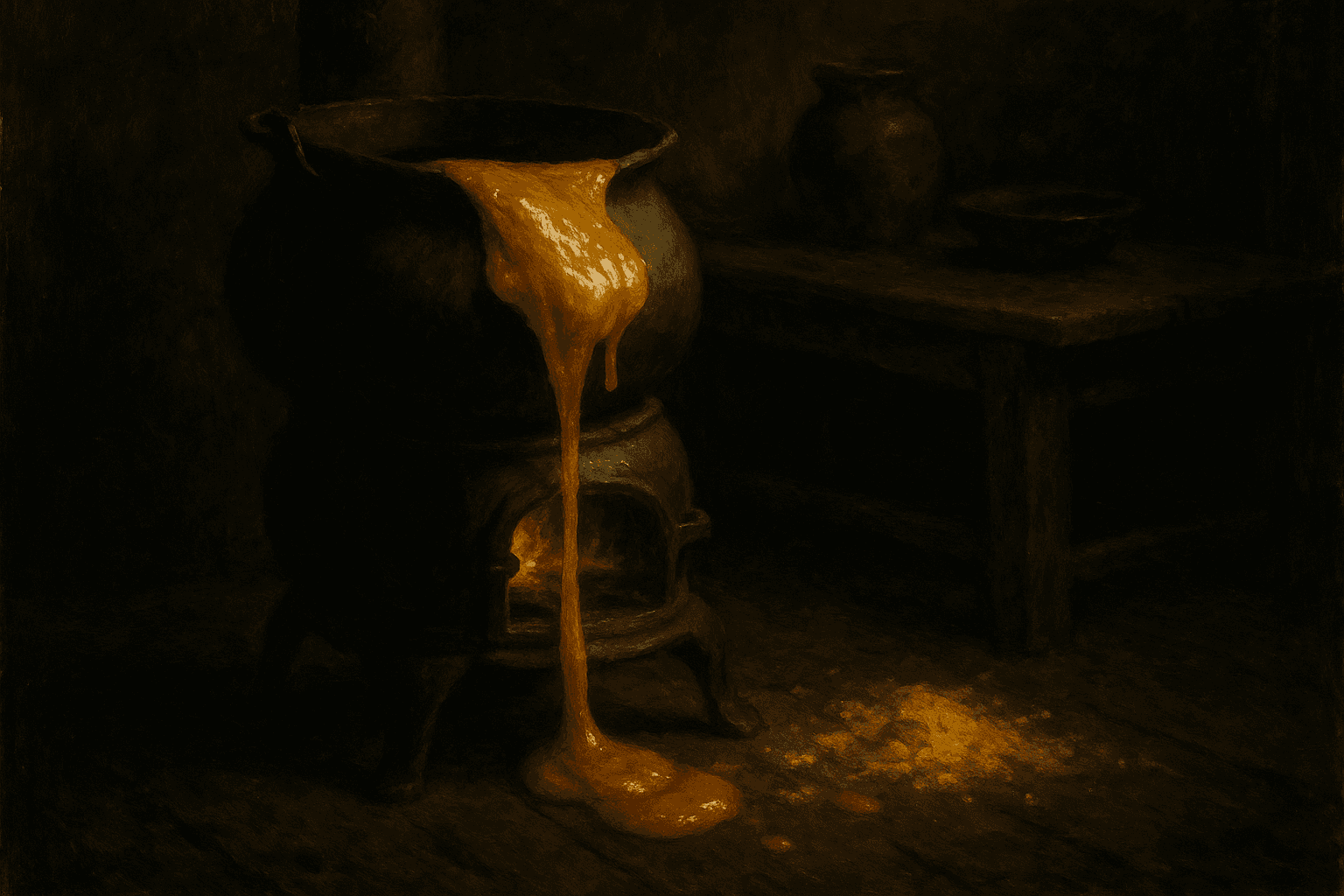
Rubber Before Goodyear: The Gum That Melted
Before vulcanization, rubber was a gum that melted in summer and cracked in winter. From the Maya to Goodyear, here's how it was finally tamed.
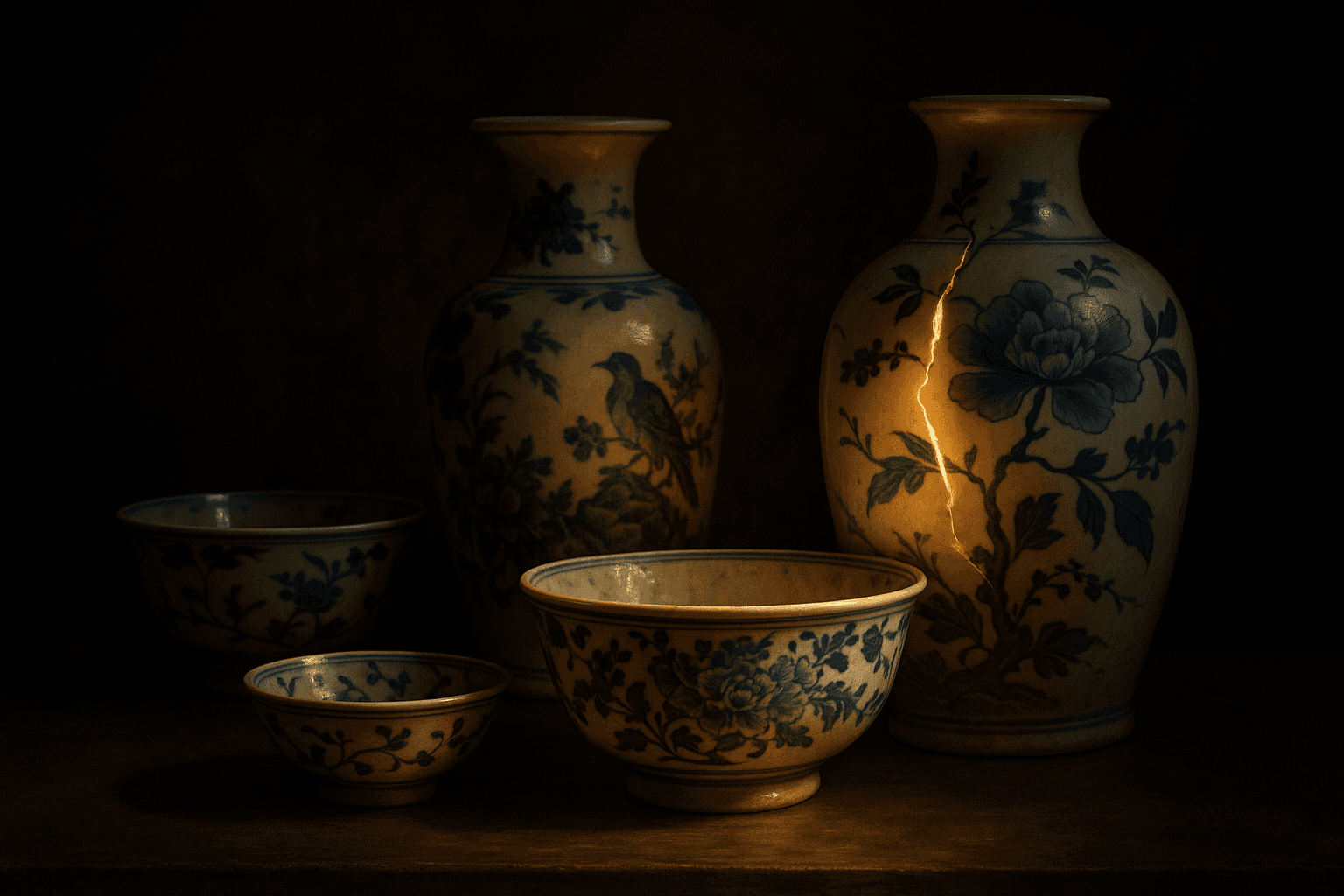
Porcelain: the Chinese secret Europe tried to steal
For centuries Europe paid fortunes for Chinese porcelain without knowing how it was made. This is the story of a hundred-year industrial espionage.
The History of Glass: The Material That Changed the World
Glass went from Egyptian luxury to everyday object thanks to Roman glassblowers, and later gave science its telescope and microscope.