
Procrastination: The Vice That Infuriated the Romans Who Coined the Word
Procrastination comes from the Latin «cras», tomorrow. Hesiod scolded procrastinators 2,700 years ago and Cicero declared it hateful. We're not the first.
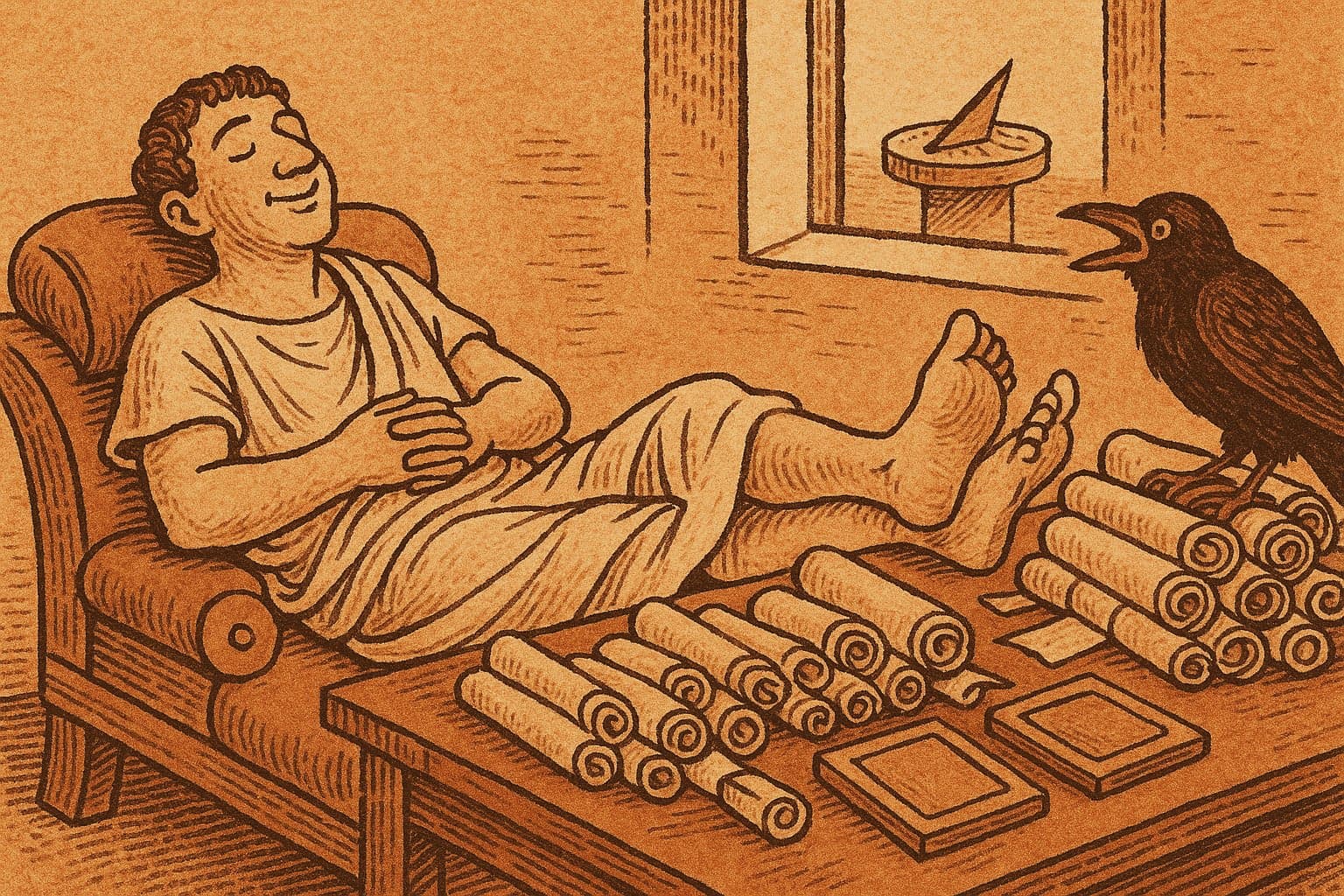
If you opened this article to avoid doing something else you should be doing, welcome: you are taking part in a tradition thousands of years old. We like to believe that procrastination is a modern disease —the phone's fault, the networks', the office's— and the word itself sounds like recently imported jargon. But the word is pure Latin and the vice is older than Latin: the first documented scoldings against procrastinators are about 2,700 years old. The only thing we have modernized is the excuses.
A word made of “tomorrow”
The anatomy of the term is deliciously literal: procrastinare is assembled from pro- (forward) and crastinus, derived from cras: “tomorrow”. To procrastinate is, letter by letter, “to tomorrow things”: to push them toward that next day which, as we practitioners well know, has the magical property of never arriving. The Romans didn't merely suffer the vice: they had it perfectly diagnosed in their grammar.
Hesiod, the first scold
But the case file predates Rome. Around 700 BC, the Greek poet Hesiod wrote Works and Days, a long poem addressed to his brother Perses — a gentleman who had squandered his inheritance and whom Hesiod considered, with documentary justification, a first-class loafer. There stands the first anti-procrastination warning in world literature: “Do not put your work off till tomorrow and the day after, for the sluggish worker does not fill his barn.” Twenty-seven centuries later, the advice remains unused in many households, occasionally including mine.
Cicero had had enough
In Rome, the matter escalated from domestic defect to political accusation. Cicero, in the middle of his oratorical war against Mark Antony, left it written in his Philippics: “in the conduct of affairs, slowness and procrastination are hateful.” And the Christian moralists later added the cruelest and loveliest image in the file: Saint Augustine compared the man who postpones his conversion to the raven, which caws “cras, cras” — “tomorrow, tomorrow” in Latin. The procrastinator, he said, lives cawing like the raven of the ark, promising a tomorrow he has no intention of honoring. Seventeen centuries before “I'll do it later,” we already had an official mascot.
The sleeping word the internet woke up
The curious thing is that the word spent centuries hibernating in dictionaries as an antiquarian's Latinism: it existed, but hardly anyone used it — that's what “leaving it for tomorrow,” “dragging one's feet” and their cousins were for. It was the digital era, with its productivity industry and its infinite catalogue of distractions, that resurrected the Latinism and made it an everyday word. There is logic to it: never in history has postponing been so easy — Hesiod's barn didn't send notifications. But let's not be fooled by nostalgia: as we saw with the word “travel” and its torture device, language has long recorded that effort costs us. We are not an unprecedented generation of idlers; we are the same species as always, with better toys for the “cras, cras.”
The antidote? It exists, and on this blog it has a proper name: it was called Isaac Asimov, the man who published five hundred books working every day from eight to ten in genuine happiness. His secret wasn't military discipline but pleasure: we never postpone what we truly want to do. Which is probably the lesson Hesiod was trying to drill into his brother twenty-seven centuries ago — and which you, who came here fleeing from a pending task, may now start applying. The article is over. Cras does not exist. Go.
Enjoy the stories behind words? Continue with the chilling origins of the word “defenestrate” and the story behind the word “boycott”, or browse the whole etymology series.
Categories
The books · born from this blog

Atahualpa con su abrigo de pelo de murciélago
y otras 49 historias verdaderas que parecen mentira
Available on Amazon
Tocar madera
Pequeña historia de las supersticiones que el mundo no ha podido soltar
Available on Amazon
100 futuros
Cien escenarios del mundo que viene con la inteligencia artificial
Available on AmazonYou may also like
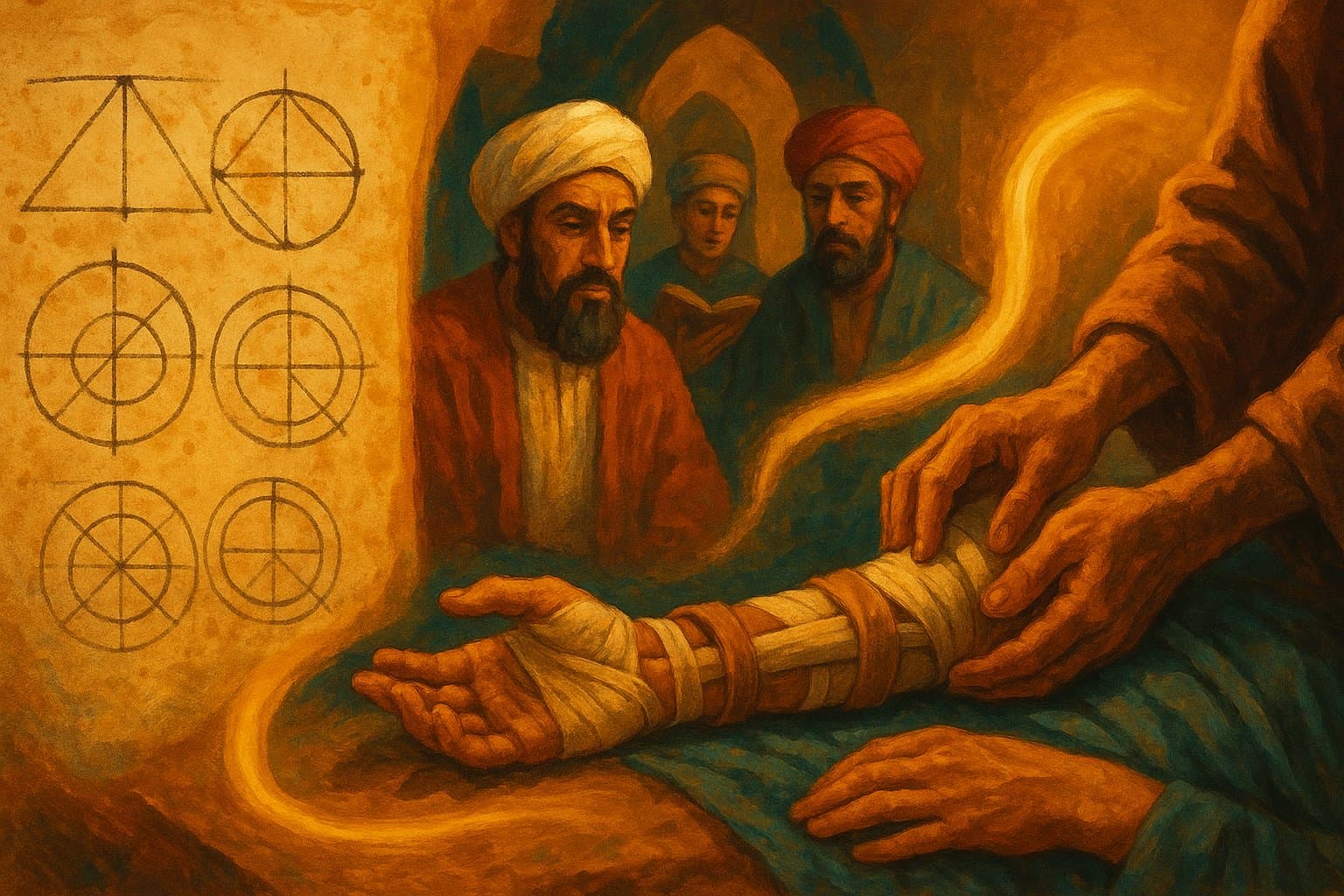
Algebra: the Arabic word that also set broken bones
«Algebra» comes from the Arabic al-jabr, «to reunite broken parts». A book by Al-Khwarizmi gave birth to a science, and in medieval Spain an «algebrista» set bones.

The origin of the word alcohol: from makeup to the glass
«Alcohol» comes from the Arabic «al-kuhl», a black powder used as eye makeup. How a cosmetic ended up naming the most famous drink in the world.

The origin of the word bikini: a nuclear explosion
«Bikini» comes from the Pacific atoll where the U.S. tested atomic bombs in 1946. A French designer named his swimsuit that way so it would be «explosive».