
There Is No Year Zero, and It Still Confuses Centuries
Between 1 BC and AD 1 there is no year zero: a sixth-century monk left it out, and ever since our centuries begin a year earlier than we tend to celebrate.
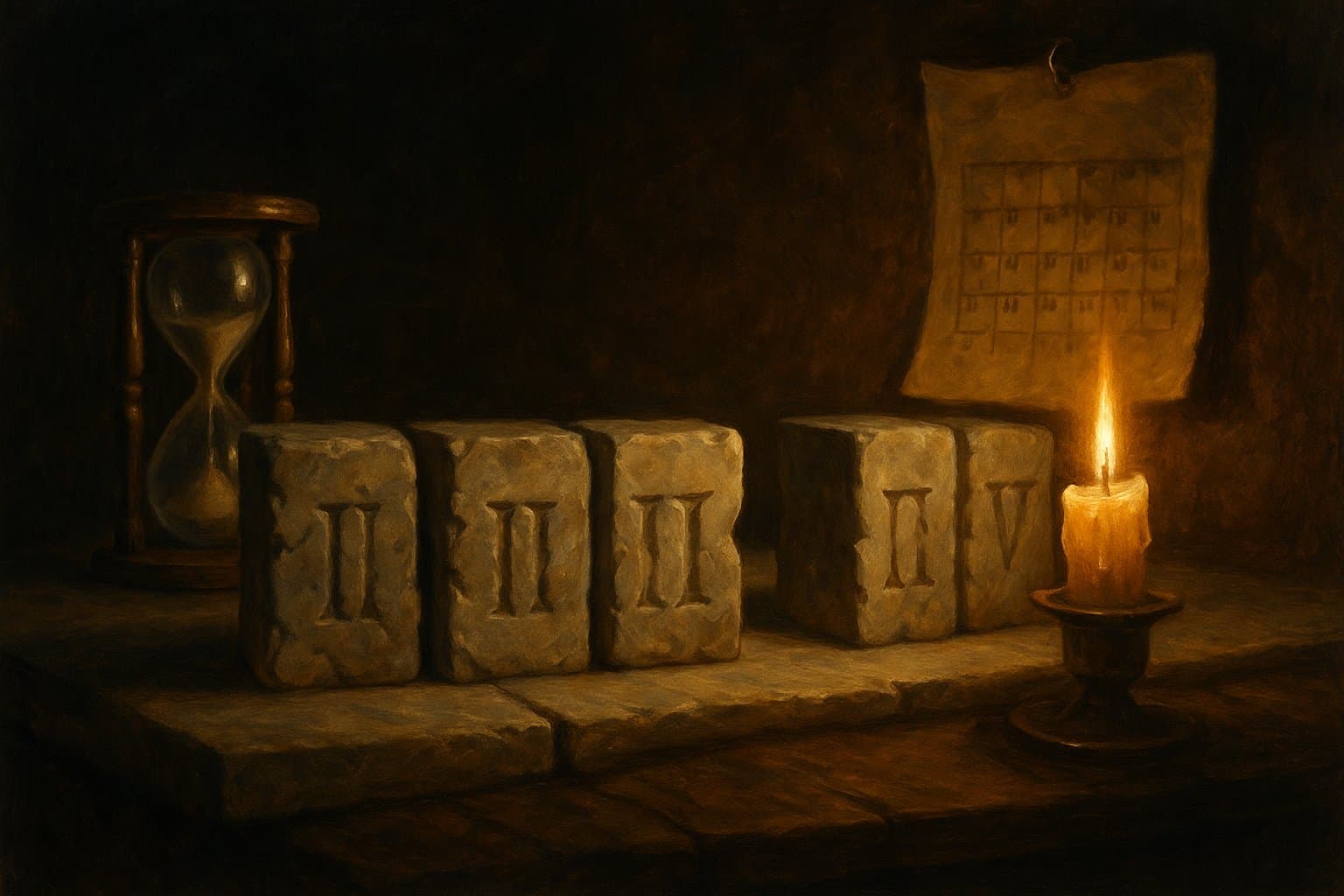
Almost everyone takes it for granted: rewind time far enough and you reach AD 1, then the year 0, then 1 BC. But that year zero doesn't exist. In our calendar, December 31 of 1 BC is followed, with no stop in between, by January 1 of AD 1. There is nothing in the middle. That absence looks like a pedant's footnote, but it's the reason centuries begin a year later than we celebrate, and the reason calculating distances between ancient dates goes wrong if you're not careful. It's worth understanding where the gap comes from.
A monk, Easter, and a brand-new count
The habit of counting years "from Christ" wasn't born with Christ, but five centuries later. Around the year 525, a monk of Scythian origin living in Rome, Dionysius Exiguus ("the Humble"), was tasked with calculating the future dates of Easter. To organize his tables he needed a starting point, and he chose to drop the old custom of counting years from the emperor Diocletian —a persecutor of Christians— and to number them instead from the supposed birth of Jesus. He called that year Anno Domini one: the "year of the Lord" number 1.
Notice the number: one, not zero. Dionysius didn't count a "year zero" before year 1 for a very simple reason of his age: to him, and to nearly all of Europe, zero didn't yet exist as a number.
The zero that hadn't reached Europe yet
Zero as a digit —the symbol 0 we use today without thinking— was developed in India around the sixth century and reached the Arab world a couple of centuries later. It didn't enter Christian Europe seriously until the 13th century, and didn't become common until quite a bit later. Dionysius counted with Roman numerals, a system that simply has no sign for "nothing": there is no way to write zero with I, V, X, L, C, D and M.
It's the same story behind the word "algorithm", which comes from the Persian mathematician al-Khwarizmi, one of the scholars who spread the Indian numerals and their zero. By the time that zero finally caught on in Europe, the count of the years had been fixed and fossilized for centuries. No one was going to rewrite every chronicle to insert a year that, at the time, couldn't even be named.
Bede and the habit of not counting a zero
Dionysius had only numbered years forward. It was the English monk Bede the Venerable who, in his Ecclesiastical History of the English People (year 731), began counting the years before the Christian era too: the "before Christ". And, a faithful heir of Dionysius, he did it with no year zero at all. For Bede, the year before AD 1 was, simply, 1 BC.
That sealed the rule we still follow: the timeline runs from …3 BC, 2 BC, 1 BC, AD 1, AD 2, AD 3… with no intermediate step. The "zero" is implicit in the midnight instant that separates the two eras, but it isn't a year with its own 365 days. It's a border, not a territory.
The century that begins in year 1
Here comes the most famous consequence. When did the 21st century begin? Nearly the whole planet celebrated it on New Year's Eve of 1999, crossing into the year 2000. But strictly speaking, the new century —and the new millennium— began a year later, on January 1, 2001. The reason is exactly the missing year zero: if the first century runs from year 1 to year 100 (a full hundred years, 1 through 100), the second runs from 101 to 200, and so on. The 20th century ended when the year 2000 ended, not 1999.
It isn't just almanac pedantry: it's the same logic that, between the inherited names of the Roman months and February's oddities, fills our calendar with details we carry along without remembering why. The year-2000 mix-up was a clash between what people felt as the turn of the millennium (three nines flipping into three zeros) and what the arithmetic said. As usual, the feeling won.
Astronomers do have a year zero
Historians aren't much bothered by the gap, but anyone who needs to calculate with dates —astronomers, chronologists, programmers— finds the missing year zero a nuisance. Subtracting a BC year from an AD year forces you to remember to add (or subtract) one by hand, or the result comes out skewed. Between January 1 of 500 BC and January 1 of AD 500 there are not a thousand years, but 999: precisely because of the year that's missing.
That's why astronomers use a different numbering, astronomical year numbering, which does include a year 0. In it, 1 BC is called year 0; 2 BC is year −1; 3 BC is year −2, and so on backward with negative numbers. With that convention, the sums become plain integer arithmetic. The international date standard ISO 8601 —the one that writes dates as 2026-07-01— adopts the same idea: its "year 0000" equals the historical 1 BC. Two calendars for the same history: one built to narrate, the other to calculate.
A border with no land
The year zero is, at heart, a useful ghost: it never existed as a real span of time, yet it explains why centuries start "late", why sums crossing the Christian era come out crooked, and why astronomers had to invent their own calendar. All because of a sixth-century monk who did the only thing he could with the numbers at hand: start counting from one. As with so many gestures we repeat when the year turns, we keep carrying an ancient decision whose reason almost no one remembers.
References
- "Year zero", Wikipedia (the absence of a year zero, Bede's role and astronomical year numbering). en.wikipedia.org
- "Dionysius Exiguus", Wikipedia (the Easter computus and the origin of Anno Domini in the year 525). en.wikipedia.org
- "Astronomical year numbering", Wikipedia (the astronomers' year 0 and its relation to 1 BC). en.wikipedia.org
- Claus Tøndering, "Counting years", Calendar FAQ (why the century begins in year 1 and the 999 years between 500 BC and AD 500). tondering.dk
Enjoy the stories behind the calendar? Continue with why February has 28 days and why September means seven while being the ninth month, or browse the whole historical curiosities series.
Categories
The books · born from this blog

Atahualpa con su abrigo de pelo de murciélago
y otras 49 historias verdaderas que parecen mentira
Available on Amazon
Tocar madera
Pequeña historia de las supersticiones que el mundo no ha podido soltar
Available on Amazon
100 futuros
Cien escenarios del mundo que viene con la inteligencia artificial
Available on AmazonYou may also like
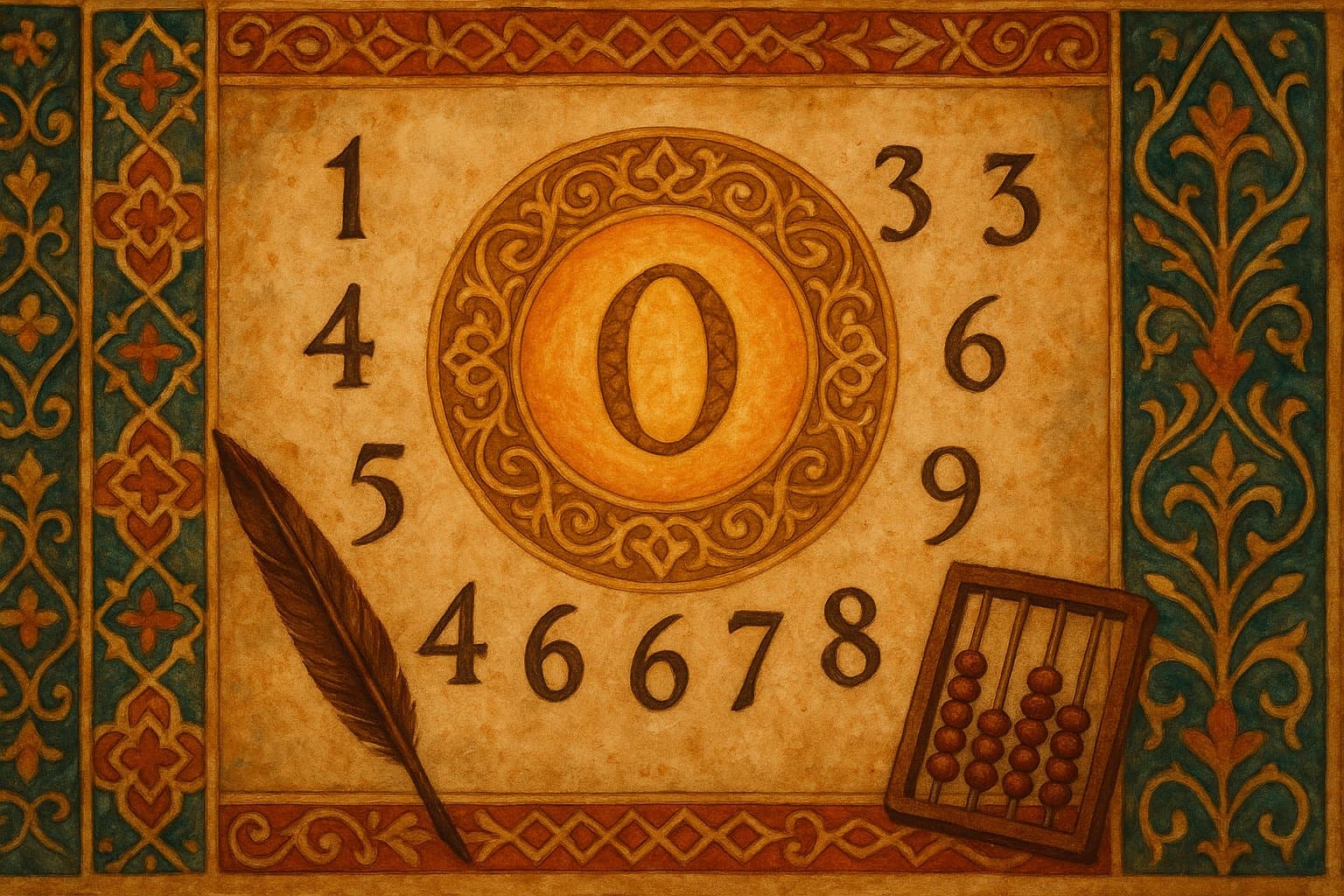
Cipher and zero: two words born from the same void
«Cipher» and «zero» come from the same Arabic word, sifr, meaning «empty». How one void gave us two words that today seem like opposites.
The Year Without a Summer of 1816
In 1815 Mount Tambora erupted and darkened the planet. 1816 became the year without a summer: failed crops, famine and the birth of Frankenstein.

Rubber Before Goodyear: The Gum That Melted
Before vulcanization, rubber was a gum that melted in summer and cracked in winter. From the Maya to Goodyear, here's how it was finally tamed.