
Cipher and zero: two words born from the same void
«Cipher» and «zero» come from the same Arabic word, sifr, meaning «empty». How one void gave us two words that today seem like opposites.
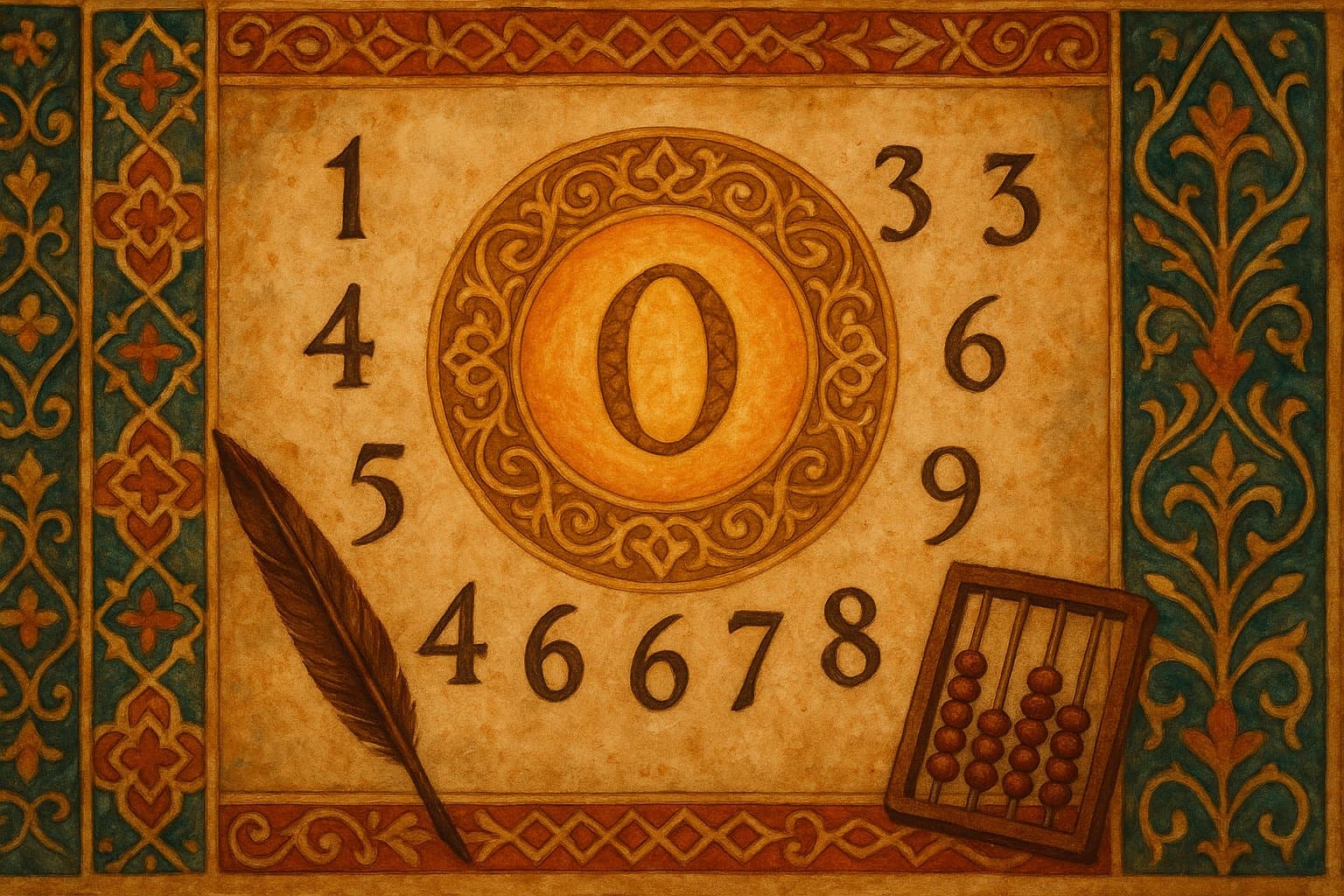
They look like two different, even opposite, words. A cipher (or digit) is any number, a sign full of information; zero is nothing, the empty slot where there is no quantity. And yet «cipher» and «zero» are the same word: both descend from the Arabic ṣifr, which meant «empty», and both entered Europe through the same door that brought us the numbers we use today. It is one of the most elegant coincidences hidden in our language.
A void that traveled from India
The origin lies farther away than it seems. Between the sixth and eighth centuries, the mathematicians of India already handled a symbol for «nothing» that they called in Sanskrit śūnya (शून्य), a word meaning «empty» that also carried philosophical weight in Hindu and Buddhist thought. It was not merely an arithmetic sign: it was the idea that absence, too, could be written down.
When that numbering system reached the Islamic world, Arab scholars translated the concept literally. Śūnya «empty» became ṣifr (صفر), which in Arabic means exactly that: «empty», «nothing». The word named the new round sign used to mark a position with no value. From Sanskrit to Arabic, the void kept its name.
Two roads from a single word
This is where the story forks. When Arabic numbering entered medieval Europe —again through the door of science, as happened with «algebra» and «algorithm»— the word ṣifr was Latinized in two different ways, and each version followed its own destiny.
On one hand, some translators adapted it as cifra (Medieval Latin cifra). On the other, the Italian mathematician Leonardo of Pisa, «Fibonacci», in his Liber Abaci of 1202, preferred the form zephirum. One Arabic word, two Latin transcriptions: from the first would come «cipher», from the second would come «zero».
How «cipher» stopped being the void
At first, «cipher» meant precisely «zero»: that was the new sign, the one that did not exist in Roman numerals and that caught everyone's attention. But because zero was the most visible novelty of the whole system, people began to use «cipher» to refer to any of the new signs, not just the round one. So, little by little, «cipher» went from naming the void to naming any digit: even today «cipher» can mean a numeral, though the word began by meaning «nothing».
And there was a second leap. Because those signs came from abroad and struck the average European as mysterious, «cipher» also took on the sense of «secret writing». From there come «to cipher» and «to decipher»: the earliest coded messages substituted numbers for letters, which is why encoding a text was said to «put it in cipher». The same root that names a digit also names the hidden code of spies.
How «zephirum» shrank into «zero»
The other branch had a journey more phonetic than semantic. Fibonacci's zephirum passed into Italian and there wore down in the mouths of speakers: zephirum → zefiro → zefro → zero. The middle syllable dropped out, as tends to happen with heavily used words, and what remained was the Italian «zero», which English borrowed as «zero».
Curiously, this version did not change its meaning: «zero» went on naming exactly what ṣifr and śūnya named at the start —the void, nothing, the absence of quantity. While «cipher» filled up with new senses, «zero» stayed faithful to the original emptiness.
Cousins scattered across Europe
The family is enormous and it is everywhere. From the same ṣifr came the English cipher (which means at once «zero», «digit» and «secret code»), the German Ziffer, the French chiffre, and the Italian and Spanish cifra. In almost all of those languages the two ideas —the number and the secret— live side by side, because they carry the same medieval ambiguity.
That the same sign is called «zero» when we think of nothing and «cipher» when we think of quantity is, deep down, a memory of the moment when Europe learned to write the void. It is no accident that both arrive wrapped in the Arabic air of medieval science, the same air that brought words like «alcohol» into our language.
The void that changed everything
It is worth remembering why that sign was so revolutionary. Without a symbol for nothing, there is no positional notation: you cannot tell 15 from 105 or from 150. Zero is not just «nothing»; it is what gives place value to every other digit. Its arrival was so important —and so suspect— that some European cities went as far as banning its use for fear of accounting fraud. The same void that seems obvious to us today took centuries to be accepted, just like the year zero that our calendars never managed to include.
So the next time you write a multi-digit number or add a zero on the right, remember that you are using two daughters of the same Arabic word: two different ways of naming, for a thousand years now, a void that turned out to be full of consequences.
References
- «Zero — Etymology, Origin & Meaning», Etymonline. etymonline.com
- «Cipher — Etymology, Origin & Meaning», Etymonline. etymonline.com
- «Cero», Rinconete (Fernando A. Navarro), Centro Virtual Cervantes. cvc.cervantes.es
- «Zero», Wikipedia. en.wikipedia.org
Do you enjoy the stories behind words? Continue with the origin of «algebra» or explore the whole etymology series.
Categories
The books · born from this blog
Atahualpa con su abrigo de pelo de murciélago
y otras 49 historias verdaderas que parecen mentira
Available on Amazon
Tocar madera
Pequeña historia de las supersticiones que el mundo no ha podido soltar
Available on Amazon
100 futuros
Cien escenarios del mundo que viene con la inteligencia artificial
Available on AmazonYou may also like

Hurricane, hammock, canoe: the first American words
Canoe, hurricane and hammock were the first words the Americas gave to Spanish and English. All three were born in Taíno, a now-extinct Caribbean tongue.

Hazard, chess and checkmate: words from dice and the board
«Hazard» comes from Arabic az-zahr, the die; «chess» and «checkmate» from Persian shah. Three everyday words that arrived with medieval board games.
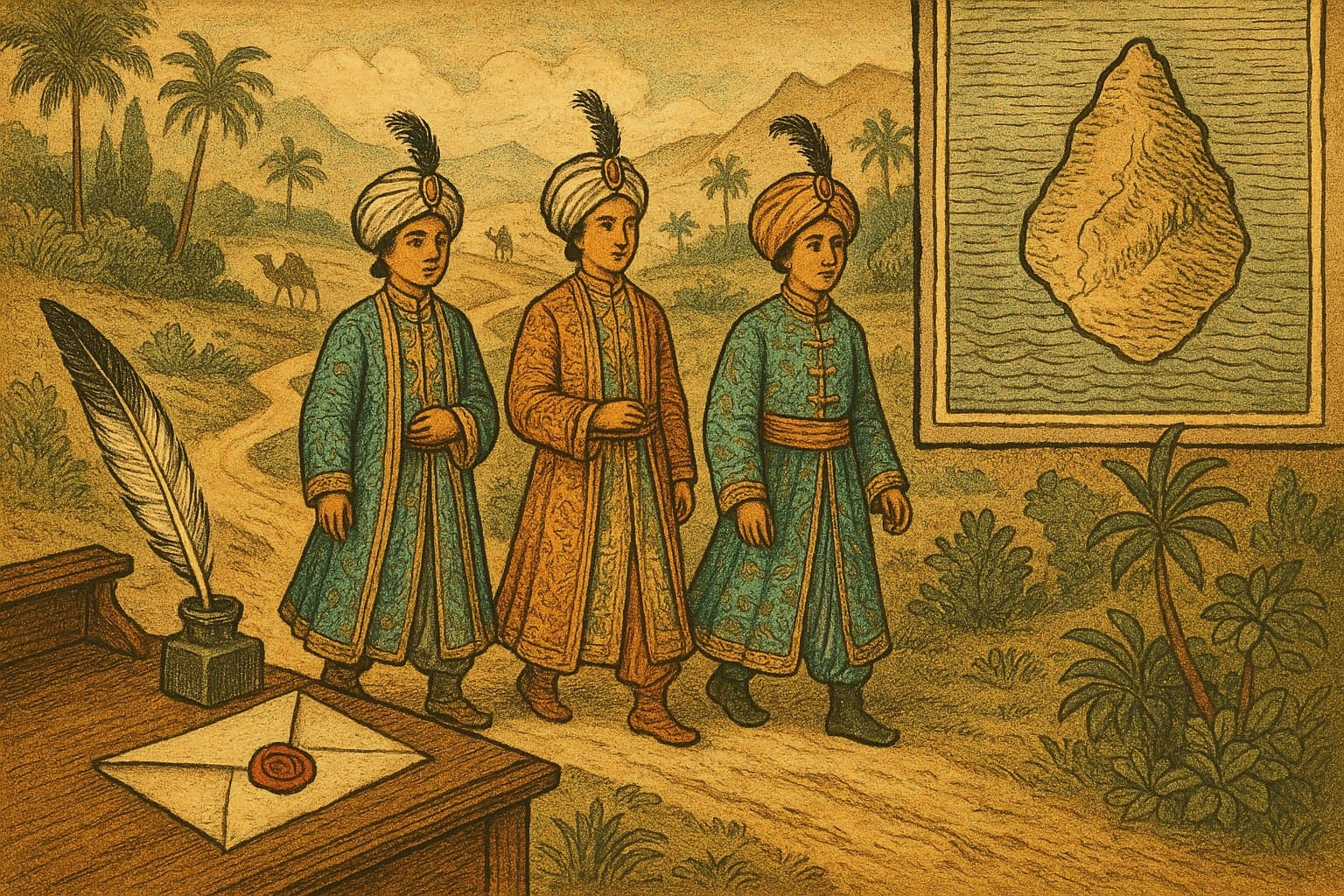
Serendipity: The Word Born in a Letter From 1754
Few words have an exact birth certificate. Serendipity was born on January 28th, 1754, in a private letter — and its root is the old name of Sri Lanka.